
Introduction
A healthy diet for weight loss is not about starving yourself or following extreme food rules. It is about eating the right foods in the right amounts and building habits you can follow for life. Many people start dieting with high hopes, but they quit because the plan feels hard, confusing, or boring. This is why understanding the basics matters so much.
When you choose a healthy diet for weight loss, you focus on balance, not punishment. You eat foods that support your body, give you energy, and help you feel full for longer. At the same time, you slowly reduce foods that add extra calories without real nutrition. This approach works for beginners and intermediate learners because it is simple and flexible.
Another important point is that weight loss is not only about food. However, diet plays the biggest role. Exercise helps, but what you eat every day decides your progress. A smart weight loss diet plan supports your metabolism, controls hunger, and improves overall health.
In this guide, you will learn what a healthy diet for weight loss really means, why it is important, and how to follow it step by step. You will also discover common mistakes, useful tips, and answers to popular questions. By the end, you will have a clear and realistic path to start eating better and losing weight safely.
What is Healthy Diet for Weight Loss?
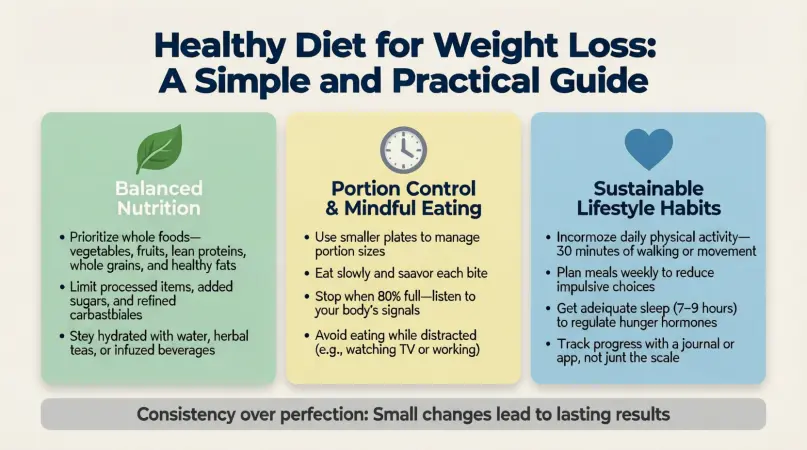
A healthy diet for weight loss is a way of eating that helps you reduce body fat while still meeting your body’s nutritional needs. It focuses on whole foods, proper portions, and regular meals. The goal is steady progress, not quick fixes.
This type of diet includes fruits, vegetables, lean proteins, whole grains, and healthy fats. It limits processed foods, sugary drinks, and excess junk snacks. Instead of cutting entire food groups, it teaches you how to balance them.
Healthy eating habits are a key part of this process. You learn to listen to hunger signals, eat mindfully, and stop overeating. Over time, your body adapts, and weight loss feels more natural and less stressful.
You May Also Like It
Daily Exercise Routine: A Simple Guide for a Healthier Life
Protein Rich Foods List for Health & Muscle
Diet Plan for Healthy Life – Simple Steps to Stay Fit
Why is Healthy Diet for Weight Loss Important?
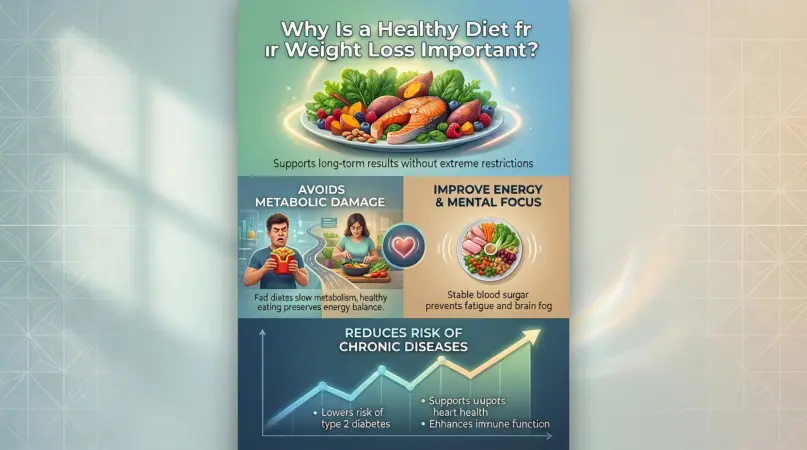
A healthy diet for weight loss is important because it supports both physical and mental health. Crash diets may reduce weight fast, but they often harm the body and lead to weight regain.
When you follow a balanced diet, your body gets vitamins, minerals, and fiber it needs to work well. This improves digestion, energy levels, and mood. As a result, you are more likely to stay consistent.
Also, a proper weight loss diet plan helps prevent common problems like nutrient deficiency, muscle loss, and extreme fatigue. It teaches long-term skills instead of short-term tricks.
Detailed Step-by-Step Guide
Step 1: Set Realistic Goals
Start with small and clear goals. Aim to lose weight slowly, such as one to two pounds per week. This pace is safe and easier to maintain.
Write your goal down and focus on progress, not perfection. For example, plan to improve your meals instead of aiming for instant results.
Step 2: Understand Calories and Portions
Calories matter in a healthy diet for weight loss. However, quality is just as important as quantity. Learn basic portion sizes and avoid oversized servings.
Use smaller plates and eat slowly. This simple habit helps control intake without feeling restricted.
Step 3: Choose Whole and Natural Foods
Base your meals on whole foods. These foods are filling and rich in nutrients.
Good choices include:
- Fresh vegetables and fruits
- Lean meats, eggs, and legumes
- Whole grains like oats and brown rice
- Nuts, seeds, and olive oil
These foods support healthy eating habits and reduce cravings.
Step 4: Balance Your Macronutrients
A balanced diet includes protein, carbohydrates, and fats. Each plays a role in weight loss.
Protein helps build muscle and keeps you full. Carbohydrates provide energy, and healthy fats support hormones. Do not remove any group completely.
Step 5: Plan Your Meals Ahead
Meal planning makes a healthy diet for weight loss easier. Plan simple meals for the week and prepare ingredients in advance.
This reduces the chance of ordering fast food or skipping meals. Even basic planning saves time and effort.
Step 6: Stay Hydrated
Water supports digestion and appetite control. Sometimes thirst feels like hunger.
Drink water before meals and throughout the day. Limit sugary drinks and packaged juices.
Step 7: Practice Mindful Eating
Eat without distractions when possible. Focus on taste, texture, and fullness.
Mindful eating improves portion control and helps you enjoy food more.
You May Also Like It
Best Foods for Energy: Boost Your Vitality Naturally
Nutrition Tips for Beginners: Easy Guide for Healthy Eating
Ways to Improve Mental Health: Simple and Practical Steps for Daily Life
Benefits of Healthy Diet for Weight Loss
- Supports steady and safe weight loss
- Improves energy and daily focus
- Reduces hunger and cravings
- Supports heart and digestive health
- Builds long-term healthy eating habits
- Improves confidence and body awareness
Disadvantages / Risks
- Results may feel slow at first
- Requires planning and consistency
- Social eating situations can be challenging
- Initial cravings for processed foods
These risks are manageable with patience and support.
Common Mistakes to Avoid
One common mistake is skipping meals. This often leads to overeating later. Another mistake is cutting calories too much, which slows metabolism.
Avoid relying on fad diets or miracle foods. A healthy diet for weight loss works best when it is balanced and realistic.
Also, do not ignore sleep and stress. Poor sleep can increase hunger and reduce motivation.
FAQs
What is the best healthy diet for weight loss?
The best healthy diet for weight loss is one you can follow long term. It should include whole foods, proper portions, and regular meals without extreme rules.
How fast can I lose weight safely?
Safe weight loss is usually one to two pounds per week. Faster loss may lead to muscle loss and health issues.
Can I eat carbs and still lose weight?
Yes, carbohydrates are part of a balanced diet. Choose whole grains and control portions instead of avoiding carbs completely.
Do I need to exercise with my diet?
Exercise is helpful but not required at the start. A healthy diet for weight loss can work alone, but activity improves results and health.
How do I control cravings?
Eat enough protein and fiber, drink water, and avoid long gaps between meals. Cravings often reduce over time.
Is snacking allowed?
Yes, smart snacking is fine. Choose fruits, nuts, or yogurt instead of sugary snacks.
Expert Tips & Bonus Points
Focus on habits, not numbers. Build one habit at a time, such as adding vegetables to meals.
Track progress beyond the scale. Notice energy, mood, and how clothes fit.
Allow flexibility. Enjoy small treats occasionally to stay consistent.
Remember that a healthy diet for weight loss is a journey, not a race.
Conclusion
A healthy diet for weight loss is one of the most powerful tools you can use to improve your life. It is not about strict rules or giving up your favorite foods forever. Instead, it is about learning how to eat in a way that supports your body and goals.
By focusing on whole foods, balanced meals, and mindful habits, you create a system that works with your lifestyle. This makes weight loss feel more natural and less stressful. Over time, small daily choices add up to big results.
The key is consistency. You do not need to be perfect every day. You only need to stay committed and patient. When challenges appear, return to the basics and keep moving forward.
A healthy diet for weight loss also improves energy, confidence, and overall health. These benefits go far beyond the number on the scale. Start where you are, use the steps in this guide, and build habits you can maintain. With the right mindset and approach, lasting weight loss is possible and achievable.
You May Also Like It
Balanced Diet Plan: A Simple and Practical Guide for Everyday Health
Signs of Depression: A Clear and Simple Guide for Everyone
Mental Health Self Care: A Simple and Practical Guide for Everyday Life