
Introduction
A daily exercise routine is one of the easiest and most effective ways to improve your overall health and quality of life. Many people believe that exercise requires expensive equipment, long gym sessions, or advanced fitness knowledge. In reality, building a daily exercise routine can be simple, flexible, and suitable for all fitness levels. Whether you are just starting your fitness journey or already have some experience, consistency matters more than intensity.
In today’s busy lifestyle, people often ignore physical activity due to lack of time or motivation. However, even short and regular workouts can make a big difference. A daily exercise routine helps you stay active, manage stress, improve energy levels, and support long-term health. It also builds discipline and creates a positive habit that benefits both the body and mind.
This guide is designed for beginners and intermediate readers who want a clear, practical, and realistic approach to daily exercise. You will learn what a daily exercise routine is, why it is important, and how to create one step by step. The article also covers benefits, risks, common mistakes, expert tips, and frequently asked questions. By the end, you will have enough knowledge and confidence to design a routine that fits your lifestyle and goals.
Most importantly, this article focuses on simplicity and sustainability. You do not need to be perfect or push yourself too hard. The goal is to move your body every day in a safe and enjoyable way. With the right mindset and guidance, a daily exercise routine can become a natural and rewarding part of your life.
What Is a Daily Exercise Routine?
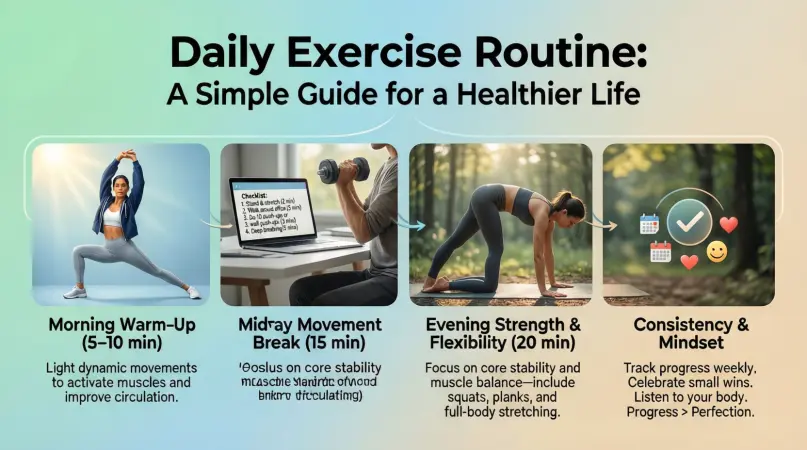
A daily exercise routine is a planned set of physical activities that you perform every day to stay active and healthy. It can include different types of exercises such as stretching, cardio, strength training, and relaxation movements. The routine does not have to be the same every day, but it should follow a consistent structure.
For example, some people prefer a morning exercise session, while others like to work out in the evening. A daily exercise routine can be done at home, outdoors, or at a gym. It can last anywhere from ten minutes to one hour, depending on your schedule and fitness level.
The key idea behind a daily exercise routine is regular movement. Instead of exercising only once or twice a week, you focus on daily activity. This approach helps your body adapt gradually and reduces the risk of injury. Over time, it improves endurance, strength, and flexibility.
A good daily exercise routine balances different types of movements. It should challenge your body but also allow enough recovery. When done correctly, it becomes a healthy habit rather than a stressful task.
You May Also Like It
Ways to Improve Mental Health: Simple and Practical Steps for Daily Life
Protein Rich Foods List for Health & Muscle
Diet Plan for Healthy Life – Simple Steps to Stay Fit
Why Is a Daily Exercise Routine Important?

A daily exercise routine is important because the human body is designed to move regularly. When you stay active, your muscles, joints, heart, and lungs function better. Daily movement supports physical health and mental well-being at the same time.
One major reason to follow a daily exercise routine is disease prevention. Regular exercise helps control weight, improves blood circulation, and supports a healthy heart. It also reduces the risk of lifestyle-related conditions such as diabetes and high blood pressure.
Another important factor is mental health. Exercise releases natural chemicals in the brain that improve mood and reduce stress. A daily exercise routine can help manage anxiety, improve focus, and support better sleep.
Consistency is also easier when exercise becomes part of your daily schedule. Instead of skipping workouts due to busy weeks, you maintain a steady rhythm. Over time, this consistency leads to long-lasting results and a stronger sense of self-discipline.
Detailed Step-by-Step Guide
Step 1: Set Clear and Realistic Goals
Before starting a daily exercise routine, define your goals clearly. Ask yourself what you want to achieve. Your goal might be to improve fitness, lose weight, increase flexibility, or simply stay active.
Make sure your goals are realistic and specific. For example, instead of saying “I want to get fit,” say “I want to exercise for twenty minutes every day.” Clear goals help you stay focused and motivated.
Step 2: Choose the Right Type of Exercises
A balanced daily exercise routine includes different types of exercises. These usually fall into four main categories.
- Warm-up exercises to prepare the body
- Cardio exercises to improve heart health
- Strength exercises to build muscles
- Cool-down and stretching to relax the body
For beginners, simple movements like walking, bodyweight exercises, and light stretching are enough. Intermediate readers can add more challenging exercises as they progress.
Step 3: Decide the Best Time of Day
Choose a time that fits your lifestyle. Some people enjoy morning exercise because it boosts energy for the day. Others prefer evening workouts to release stress.
The best time is the one you can maintain consistently. A daily exercise routine works only when it becomes a habit. Pick a time when you are least likely to skip your session.
Step 4: Start with a Short Duration
Many people quit because they start with long and intense workouts. Instead, begin with a short duration, such as ten to twenty minutes.
As your body adapts, you can slowly increase the duration and intensity. This gradual approach reduces fatigue and lowers the risk of injury.
Step 5: Create a Simple Weekly Structure
Although it is called a daily exercise routine, variety is important. You can rotate different focus areas during the week.
For example:
- Day one: Cardio and stretching
- Day two: Strength training
- Day three: Light cardio and flexibility
- Day four: Strength training
- Day five: Active recovery
- Day six: Full body workout
- Day seven: Gentle movement or rest
This structure keeps your routine interesting and balanced.
Step 6: Listen to Your Body
Pay attention to how your body feels. Mild muscle soreness is normal, but sharp pain is a warning sign.
A daily exercise routine should challenge you without causing harm. Rest when needed and adjust exercises based on your comfort level.
Step 7: Track Your Progress
Tracking progress helps you stay motivated. You can write down your workouts, duration, and how you feel after each session.
Seeing improvement over time builds confidence and encourages consistency. Progress is not always about physical changes but also about improved energy and mood.
Benefits of a Daily Exercise Routine
- Improves overall physical fitness and stamina
- Supports healthy weight management
- Strengthens muscles and bones
- Enhances heart and lung health
- Boosts mood and reduces stress
- Improves sleep quality
- Increases energy levels throughout the day
- Builds discipline and self-confidence
- Supports long-term health and longevity
Disadvantages and Risks
- Risk of injury if exercises are done incorrectly
- Overtraining can lead to fatigue and burnout
- Lack of rest may slow recovery
- Poor technique can cause muscle strain
- Unrealistic expectations may reduce motivation
These risks can be reduced with proper planning, rest, and correct form.
Common Mistakes to Avoid
One common mistake is doing too much too soon. Many beginners try to follow advanced routines, which leads to exhaustion or injury. Start slow and build gradually.
Another mistake is skipping warm-up and cool-down sessions. These are essential parts of a daily exercise routine and help prevent injuries.
Inconsistency is also a major issue. Exercising only when you feel motivated does not create a habit. Stick to your schedule even on low-energy days.
Ignoring nutrition and hydration can reduce performance. Exercise works best when combined with healthy eating and enough water.
Finally, comparing yourself to others can be discouraging. Focus on your own progress and personal goals.
You May Also Like It
Best Foods for Energy: Boost Your Vitality Naturally
Nutrition Tips for Beginners: Easy Guide for Healthy Eating
Healthy Diet for Weight Loss: A Simple and Practical Guide
FAQs
How long should a daily exercise routine be?
A daily exercise routine can be as short as ten minutes or as long as one hour. For beginners, twenty to thirty minutes is a good starting point. The most important factor is consistency, not duration.
Can beginners follow a daily exercise routine?
Yes, beginners can and should follow a daily exercise routine. The key is to choose simple exercises and low intensity. Gradual progress helps build strength and confidence safely.
Is it okay to exercise every day?
Exercising every day is safe if you balance intensity and include rest or light activity days. A daily exercise routine does not mean intense workouts every day. Active recovery is important.
Do I need equipment for a daily exercise routine?
No equipment is required for a basic daily exercise routine. Bodyweight exercises, walking, and stretching are effective. Equipment can be added later if desired.
What if I miss a day?
Missing one day is not a problem. Simply return to your routine the next day. Consistency over time matters more than perfection.
How soon will I see results?
Results vary from person to person. Some people notice improved energy and mood within one week. Physical changes usually appear after several weeks of consistent effort.
Expert Tips and Bonus Points
Focus on building a habit first, not on perfect performance. A simple daily exercise routine done consistently is better than a complex plan followed occasionally.
Mix activities you enjoy with exercises that challenge you. Enjoyment increases long-term commitment.
Use proper form and controlled movements. Quality is more important than speed or quantity.
Include breathing awareness during exercise. Proper breathing improves performance and relaxation.
Stay flexible with your routine. Life changes, and your exercise plan should adapt without causing stress.
Reward yourself for consistency, not just results. Small rewards reinforce positive behavior.
Conclusion
A daily exercise routine is a powerful tool for improving both physical and mental health. It does not require special equipment, long hours, or advanced skills. What it truly requires is consistency, patience, and a positive mindset. By making exercise a daily habit, you allow your body to grow stronger, more flexible, and more resilient over time.
For beginners, the journey starts with simple movements and short sessions. For intermediate readers, it is about refining technique and adding variety. In both cases, listening to your body and respecting its limits is essential. A well-planned daily exercise routine supports long-term health and reduces the risk of injury or burnout.
Remember that progress is not always visible immediately. Improvements in energy, mood, and confidence often come before physical changes. Celebrate these small wins and stay committed.
In the end, a daily exercise routine is not just about fitness. It is about creating a balanced lifestyle that supports your goals and well-being. When exercise becomes a natural part of your day, it no longer feels like a task. It becomes a source of strength, clarity, and long-term health.
You May Also Like It
Balanced Diet Plan: A Simple and Practical Guide for Everyday Health
Signs of Depression: A Clear and Simple Guide for Everyone
Mental Health Self Care: A Simple and Practical Guide for Everyday Life