
Introduction
Stamina is the ability of your body to keep going without getting tired too quickly. Whether you want to walk longer, run faster, work without fatigue, or feel more energetic during daily tasks, stamina plays a key role. Many people think stamina is only for athletes, but that is not true. Everyone needs stamina to live an active and healthy life. This is why learning the best exercises for stamina is important for beginners and intermediate fitness lovers.
In today’s busy lifestyle, low stamina is a common problem. Long sitting hours, poor eating habits, stress, and lack of movement slowly reduce our energy levels. As a result, even simple activities like climbing stairs or walking for a few minutes can feel exhausting. The good news is that stamina can be improved at any age with the right exercises and a smart routine.
This guide is written in simple English to help you understand how stamina works and how you can improve it safely. You will learn what stamina really means, why it matters, and which workouts give the best results. We will also cover step-by-step exercise methods, benefits, risks, and common mistakes.
By the end of this article, you will clearly know how to use the best exercises for stamina to build endurance, improve breathing, and feel stronger every day. Whether your goal is fitness, weight control, or better daily performance, this guide will help you move forward with confidence.
What is Best Exercises for Stamina?
The best exercises for stamina are physical activities that train your heart, lungs, and muscles to work longer without getting tired. These exercises focus on improving endurance rather than just strength or size. Stamina exercises help your body use oxygen more efficiently and manage energy better during activity.
Stamina is closely linked with cardiovascular fitness. When you practice stamina workouts regularly, your heart pumps blood more effectively, and your muscles learn to perform for longer periods. This is why activities like brisk walking, jogging, cycling, swimming, and bodyweight circuits are often recommended.
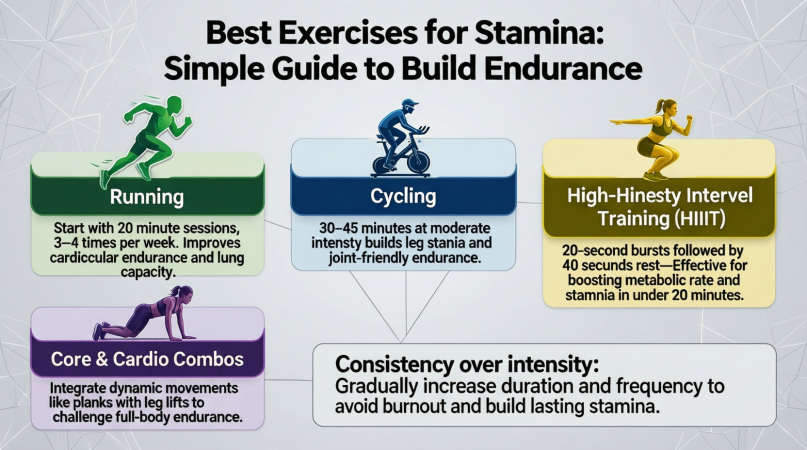
Unlike heavy weight training, stamina workouts usually involve repeated movements over a longer time. For example, running for twenty minutes builds stamina more than lifting a heavy weight once. The goal is not speed or power, but consistency and control.
The best exercises for stamina can be adjusted for all fitness levels. Beginners can start slow with low-impact movements, while intermediate people can increase intensity and duration. With time, your body adapts, making daily activities feel easier and less tiring.
You May Also Like It
Daily Exercise Routine: A Simple Guide for a Healthier Life
Protein Rich Foods List for Health & Muscle
Diet Plan for Healthy Life – Simple Steps to Stay Fit
Why is Best Exercises for Stamina Important?
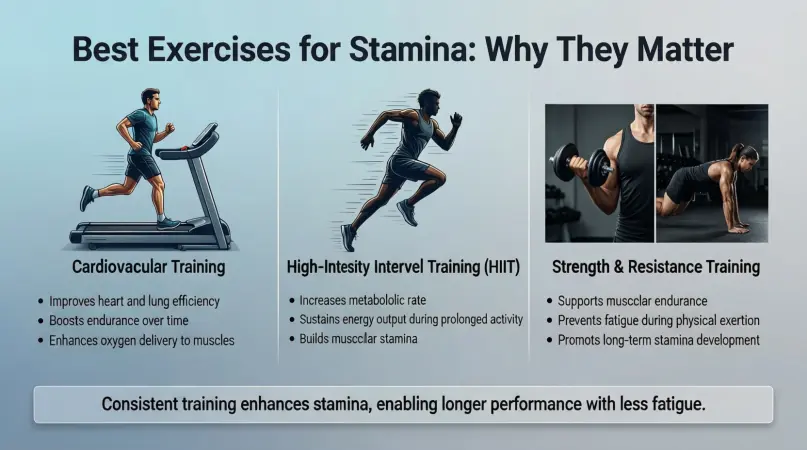
Stamina is important because it affects how you feel and perform every day. When your stamina is low, you feel tired quickly and lose motivation. When it is high, you feel energetic, active, and confident.
Here is why stamina training matters:
First, it improves heart health. Stamina workouts strengthen the heart and reduce the risk of lifestyle-related problems. A strong heart means better blood flow and oxygen delivery.
Second, it boosts daily performance. From household chores to office work, good stamina helps you stay active without frequent breaks.
Third, it supports mental strength. Regular stamina workouts reduce stress and improve mood. When your body feels strong, your mind feels positive.
Finally, stamina training supports long-term fitness goals. Whether you want to lose weight, build endurance, or stay fit as you age, the best exercises for stamina create a strong foundation.
Detailed Step-by-Step Guide
Step 1: Start with Brisk Walking
Brisk walking is one of the safest and most effective stamina workouts for beginners.
How to do it:
- Walk at a pace where you can talk but not sing
- Keep your back straight and arms relaxed
- Start with 15 minutes and increase gradually
Why it works:
Brisk walking improves heart rate and breathing without stressing joints. It prepares your body for advanced exercises.
Step 2: Jogging or Light Running
Once walking feels easy, jogging is the next step.
How to do it:
- Jog at a comfortable speed
- Focus on steady breathing
- Run for short intervals if needed
Why it works:
Jogging trains your lungs and leg muscles to work longer. It is one of the best exercises for stamina improvement.
Step 3: Cycling for Endurance
Cycling is great for building stamina without joint pressure.
How to do it:
- Use a steady pace on flat ground
- Keep pedaling continuous
- Increase time before increasing speed
Why it works:
Cycling strengthens legs and improves cardiovascular endurance effectively.
Step 4: Jump Rope Training
Jump rope is a powerful full-body stamina workout.
How to do it:
- Jump lightly on your toes
- Keep movements small and controlled
- Start with short rounds
Why it works:
It improves coordination, breathing, and overall endurance in less time.
Step 5: Swimming for Full-Body Stamina
Swimming is excellent for total stamina development.
How to do it:
- Choose a simple stroke
- Swim at a steady rhythm
- Take breaks when needed
Why it works:
Water resistance builds stamina while protecting joints.
Step 6: Bodyweight Circuit Training
Circuit training combines multiple exercises.
Example circuit:
- Squats
- Push-ups
- Mountain climbers
- Plank
Why it works:
Circuits keep your heart rate high and train muscles to resist fatigue.
Benefits of Best Exercises for Stamina
- Improves heart and lung capacity
- Increases daily energy levels
- Helps manage body weight
- Reduces stress and anxiety
- Enhances muscle endurance
- Improves sleep quality
- Supports long-term health
- Boosts confidence and motivation
Disadvantages / Risks
- Overtraining can cause fatigue
- Poor form may lead to injury
- Ignoring rest slows recovery
- Sudden intensity increases strain
- Dehydration reduces performance
Common Mistakes to Avoid
Many people expect quick results and push too hard. This leads to burnout or injury. Another common mistake is skipping warm-ups. Warm muscles perform better and stay safe.
Some people focus only on one exercise. Variety is important for balanced stamina development. Also, ignoring breathing technique reduces efficiency. Controlled breathing is key.
Finally, not tracking progress can reduce motivation. Small improvements matter and should be noted.
You May Also Like It
Best Foods for Energy: Boost Your Vitality Naturally
Nutrition Tips for Beginners: Easy Guide for Healthy Eating
Healthy Diet for Weight Loss: A Simple and Practical Guide
FAQs
What are the best exercises for stamina at home?
Brisk walking in place, jump rope, bodyweight circuits, and stair climbing are effective home options. They require little space and no equipment.
How long does it take to improve stamina?
Most people notice improvement within two to four weeks of regular training. Consistency matters more than intensity.
Can beginners do stamina workouts daily?
Yes, but intensity should be low to moderate. Rest days or light sessions help recovery.
Is running the only way to build stamina?
No. Cycling, swimming, walking, and circuit training are also excellent stamina workouts.
Does age affect stamina improvement?
Stamina can improve at any age. Progress may be slower with age, but results are still achievable.
Should diet change for better stamina?
Yes. Balanced meals, enough water, and proper nutrients support stamina growth and recovery.
Expert Tips & Bonus Points
Always warm up before starting and cool down after finishing. Focus on breathing rhythm during workouts. Increase duration first, then intensity.
Mix different stamina workouts to avoid boredom. Listen to your body and rest when needed. Staying consistent is more important than being perfect.
Conclusion
Building stamina is not about pushing your body to the limit. It is about training smart, staying consistent, and choosing the right activities. The best exercises for stamina help your heart, lungs, and muscles work together more efficiently. With regular practice, you will notice improved energy, better breathing, and less fatigue in daily life.
This guide showed you how simple movements like walking, cycling, swimming, and bodyweight exercises can create powerful results. You also learned the importance of avoiding common mistakes and understanding your body’s limits. Stamina training is a long-term investment in your health and confidence.
Remember, progress takes time. Start slow, stay patient, and enjoy the journey. Even small efforts, when done regularly, lead to big changes. By following the steps and tips shared here, you can safely improve endurance and live a more active life. Make stamina training part of your routine, and your body will thank you every day.
You May Also Like It
Balanced Diet Plan: A Simple and Practical Guide for Everyday Health
Signs of Depression: A Clear and Simple Guide for Everyone
Mental Health Self Care: A Simple and Practical Guide for Everyday Life