
Introduction
A balanced diet plan is one of the simplest and most powerful tools for improving overall health. Many people think eating healthy is complex, expensive, or time-consuming. In reality, it is about making smart food choices and keeping meals balanced. A good balanced diet plan gives your body the nutrients it needs to work properly every day.
For beginners, understanding what to eat can feel confusing. There is a lot of mixed advice online. Some plans focus only on weight loss, while others remove entire food groups. This often leads to frustration and unhealthy habits. A balanced diet plan focuses on moderation, variety, and consistency instead of extreme rules.
For intermediate readers, the challenge is usually sticking to healthy habits long term. Busy schedules, stress, and social events can make healthy eating difficult. That is why a practical approach matters. A balanced diet plan should fit your lifestyle, not control it.
This guide explains the topic in simple language. You will learn what a balanced diet plan is, why it matters, and how to follow it step by step. You will also discover its benefits, possible risks, and common mistakes to avoid. Real-life examples are included to make ideas easy to apply.
By the end of this article, you will have a clear understanding of how to create a balanced diet plan that supports energy, focus, and long-term wellness without stress or confusion.
What is a Balanced Diet Plan?
A balanced diet plan is a way of eating that provides the right amounts of nutrients from different food groups. It includes carbohydrates, proteins, fats, vitamins, minerals, and water in proper balance. The goal is to support the body’s daily needs without excess or deficiency.
This type of nutrition plan does not remove foods unless medically required. Instead, it focuses on portion control and food quality. A balanced diet plan encourages eating whole foods like fruits, vegetables, whole grains, lean proteins, and healthy fats.
For example, a balanced meal may include rice or bread for energy, vegetables for vitamins, protein for muscle repair, and a small amount of fat for nutrient absorption. When meals are balanced, the body functions better and feels satisfied.
Unlike strict diets, a balanced diet plan is flexible. It can be adjusted for age, activity level, culture, and personal preference. This flexibility makes it easier to follow for long periods.
In simple terms, a balanced diet plan is not about eating less. It is about eating right.
You May Also Like It
Daily Exercise Routine: A Simple Guide for a Healthier Life
Protein Rich Foods List for Health & Muscle
Diet Plan for Healthy Life – Simple Steps to Stay Fit
Why is a Balanced Diet Plan Important?
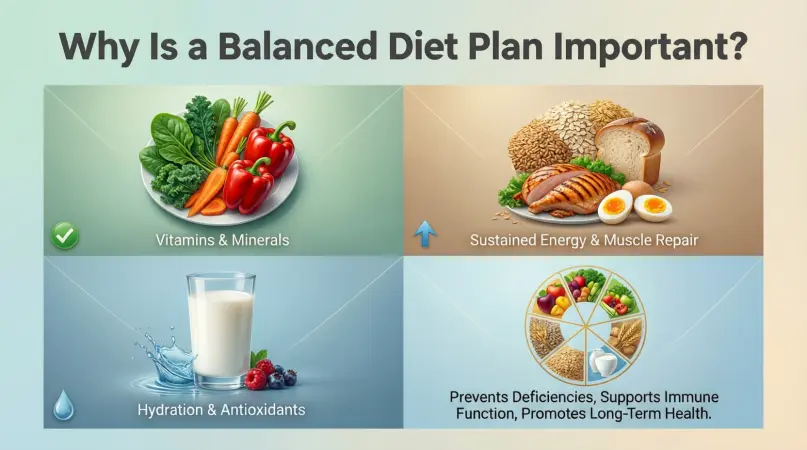
A balanced diet plan plays a key role in physical and mental health. Food is fuel, and the quality of that fuel affects how the body performs every day.
First, it helps maintain steady energy levels. When meals are balanced, blood sugar stays more stable. This reduces fatigue and sudden hunger.
Second, a balanced diet plan supports the immune system. Vitamins and minerals from fruits, vegetables, and whole foods help the body fight illness and recover faster.
Third, it helps manage weight naturally. Instead of extreme calorie cutting, balanced eating promotes fullness and reduces overeating. This makes weight control more sustainable.
In addition, good nutrition supports brain function. A healthy diet improves focus, memory, and mood. People often notice better concentration when they eat balanced meals regularly.
Finally, a balanced diet plan lowers the risk of long-term health problems. These include heart disease, diabetes, and nutrient deficiencies. Small daily choices can create strong protection over time.
Detailed Step-by-Step Guide
Step 1: Understand the Main Food Groups
The foundation of a balanced diet plan starts with knowing the food groups. Each group has a specific role in the body.
Carbohydrates provide energy. Choose whole grains, fruits, and vegetables instead of refined options.
Proteins support muscle repair and growth. Examples include eggs, fish, beans, chicken, and dairy.
Fats help absorb vitamins and support brain health. Focus on healthy fats from nuts, seeds, and oils.
Vitamins and minerals come mainly from fruits and vegetables. They support immunity and organ function.
Water is often forgotten but is essential for digestion and circulation.
Step 2: Build a Balanced Plate
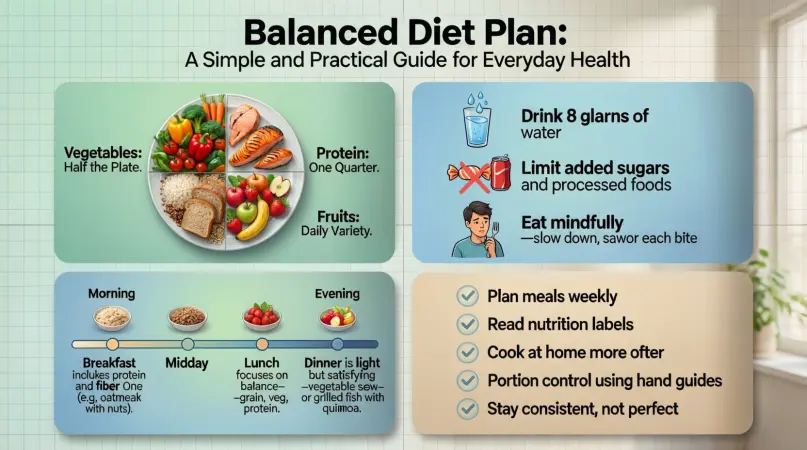
A simple method is the plate approach. Half of your plate should be vegetables and fruits. One quarter should be protein, and the remaining quarter should be whole grains.
This visual method makes meal planning easier. It also prevents overeating without strict counting.
For example, lunch could include grilled chicken, brown rice, and mixed vegetables with a small amount of oil.
Step 3: Plan Meals in Advance
Meal planning saves time and reduces unhealthy choices. When meals are planned, it is easier to follow a balanced diet plan consistently.
Start by planning three main meals and one or two snacks daily. Keep meals simple and repeat favorites.
Preparing ingredients in advance can also help. Washing vegetables or cooking grains early makes healthy eating more convenient.
Step 4: Control Portion Sizes
Even healthy foods can cause problems if eaten in large amounts. Portion control is a key part of a balanced diet plan.
Use smaller plates and listen to hunger signals. Eat slowly and stop when satisfied, not full.
Learning portion sizes takes time, but awareness improves with practice.
Step 5: Stay Consistent but Flexible
Consistency builds results, but flexibility keeps motivation. Allow occasional treats without guilt.
A balanced diet plan works best when it fits real life. Enjoy social meals and return to routine afterward.
Benefits of a Balanced Diet Plan
- Improves daily energy and reduces tiredness
- Supports healthy weight management
- Strengthens immune function
- Enhances digestion and gut health
- Improves focus and mental clarity
- Supports muscle strength and recovery
- Reduces risk of chronic diseases
- Promotes better sleep quality
Disadvantages / Risks
- Requires planning and effort at first
- Can feel confusing without guidance
- Poor portion control may slow results
- Busy schedules may reduce consistency
- Misunderstanding balance can lead to overeating
Common Mistakes to Avoid
One common mistake is skipping meals. This often leads to overeating later and unstable energy.
Another mistake is removing entire food groups without reason. This can cause nutrient gaps and cravings.
Many people also confuse healthy eating with dieting. A balanced diet plan is about nourishment, not restriction.
Relying too much on packaged foods labeled healthy is another issue. Whole foods are usually better choices.
Finally, ignoring hydration can reduce the benefits of good nutrition.
You May Also Like It
Best Foods for Energy: Boost Your Vitality Naturally
Nutrition Tips for Beginners: Easy Guide for Healthy Eating
Healthy Diet for Weight Loss: A Simple and Practical Guide
FAQs
What is the easiest way to start a balanced diet plan?
The easiest way is to start small. Focus on adding vegetables to meals and drinking enough water. Gradual changes are more sustainable.
Can a balanced diet plan help with weight loss?
Yes, it can support natural weight loss by controlling hunger and improving metabolism. Results depend on consistency and portion sizes.
Is a balanced diet plan expensive?
Not necessarily. Simple foods like grains, beans, seasonal vegetables, and eggs are affordable and nutritious.
How many meals should I eat daily?
Most people do well with three meals and one or two snacks. The key is regular eating and balanced portions.
Can I follow a balanced diet plan with cultural foods?
Yes. A balanced diet plan can include traditional foods. Balance and portion control matter more than specific dishes.
How long before results appear?
Some benefits like better energy appear within days. Long-term results like weight control take weeks of consistency.
Expert Tips & Bonus Points
Drink water before meals to support digestion and portion control.
Cook at home more often to control ingredients and portions.
Include protein in every meal to stay full longer.
Use simple spices to improve flavor without extra calories.
Track habits, not calories, to stay motivated.
Conclusion
A balanced diet plan is not a trend or short-term solution. It is a lifelong approach to eating that supports both physical and mental well-being. By focusing on variety, moderation, and consistency, anyone can improve their health without extreme rules.
For beginners, the key is simplicity. Learn the basic food groups, build balanced plates, and make small changes over time. For intermediate readers, consistency and flexibility matter most. A balanced diet plan should fit daily life and adapt to changing needs.
Healthy eating does not require perfection. It requires awareness and effort. Occasional treats and social meals are part of normal life. What matters is returning to balance afterward.
By following the steps in this guide, you can create a nutrition plan that supports energy, focus, and long-term health. A balanced diet plan helps the body work better, feel stronger, and stay protected against future health problems.
You May Also Like It
Ways to Improve Mental Health: Simple and Practical Steps for Daily Life
Signs of Depression: A Clear and Simple Guide for Everyone
Mental Health Self Care: A Simple and Practical Guide for Everyday Life