
Introduction
Anxiety is a common feeling. Almost everyone feels anxious at some point in life. It may happen before an exam, a job interview, or a big life change. However, when anxiety becomes frequent or intense, it can affect daily life. This is why learning anxiety relief techniques is so important for beginners and intermediate readers alike.
Anxiety relief techniques are simple actions you can use to calm your mind and body. They help you feel safe, focused, and more in control. The good news is that you do not need special tools or expensive programs. Many techniques are easy, free, and can be practiced anywhere.
In today’s fast world, stress is everywhere. Work pressure, family duties, health worries, and money concerns can all increase anxiety. Without proper stress management, these feelings can grow stronger over time. Thankfully, calming exercises and mental wellness habits can reduce this pressure and bring balance back into your life.
This article will guide you step by step. You will learn what anxiety relief techniques are, why they matter, and how to use them correctly. Each method is explained in simple English with real-life examples. Whether you feel anxious sometimes or often, this guide will help you build healthy habits for long-term mental wellness.
By the end, you will feel more confident about managing anxiety in daily life.
What is Anxiety Relief Techniques?
Anxiety relief techniques are methods used to reduce feelings of fear, worry, and nervousness. These techniques work by calming the nervous system and helping the mind feel safe again. They focus on both the body and the thoughts that cause anxiety.
When anxiety appears, the body often reacts first. The heart beats faster, breathing becomes shallow, and muscles tighten. Anxiety relief techniques gently slow these reactions. For example, deep breathing sends a signal to the brain that danger has passed.
These techniques are not about avoiding problems. Instead, they help you face daily challenges with a calmer mindset. Some techniques focus on the body, such as breathing and movement. Others focus on the mind, like positive thinking and awareness practices.
Stress management plays a big role here. Anxiety often grows when stress stays too long. Calming exercises help release this stress before it becomes overwhelming. Over time, the brain learns to respond in a healthier way.
Mental wellness improves when these techniques are practiced regularly. Think of them as training for your mind. Just like exercise strengthens muscles, anxiety relief techniques strengthen emotional balance.
They are useful for students, workers, parents, and anyone who wants a calmer life.
You May Also Like It
Daily Exercise Routine: A Simple Guide for a Healthier Life
Protein Rich Foods List for Health & Muscle
Diet Plan for Healthy Life – Simple Steps to Stay Fit
Why is Anxiety Relief Techniques Important?
Anxiety relief techniques are important because anxiety does not disappear on its own. If ignored, it can affect sleep, focus, and physical health. Over time, anxiety may reduce confidence and joy in daily life.
One key reason these techniques matter is prevention. Small daily habits can stop anxiety from growing into a bigger problem. For example, a few minutes of calming exercises each day can reduce stress buildup.
Another reason is control. Anxiety often makes people feel powerless. Using anxiety relief techniques gives control back. You learn that you can calm your body and thoughts when needed.
Stress management also improves decision-making. When anxiety is high, the mind reacts emotionally. When calm, the mind thinks clearly. This helps in work, relationships, and personal goals.
Mental wellness is not only about avoiding illness. It is about feeling balanced and strong inside. Anxiety relief techniques support this balance. They help you enjoy moments, handle pressure, and recover faster from stress.
In short, these techniques improve quality of life and emotional health.
Detailed Step-by-Step Guide
Step 1: Deep Breathing Practice
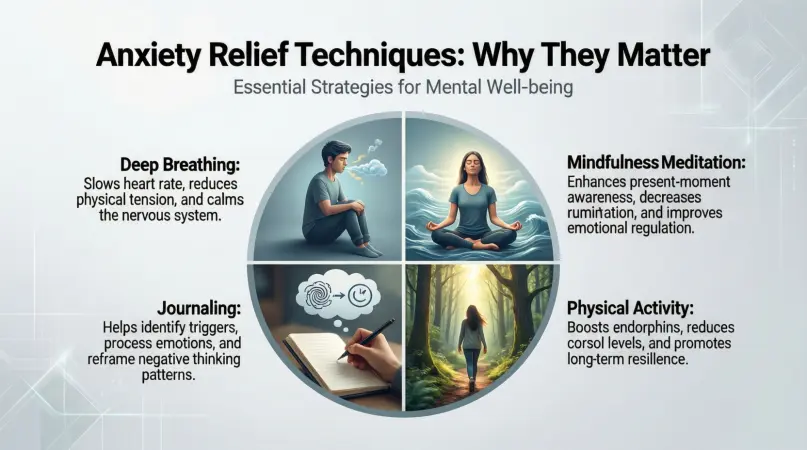
Deep breathing is one of the easiest anxiety relief techniques. It slows the heart rate and relaxes muscles.
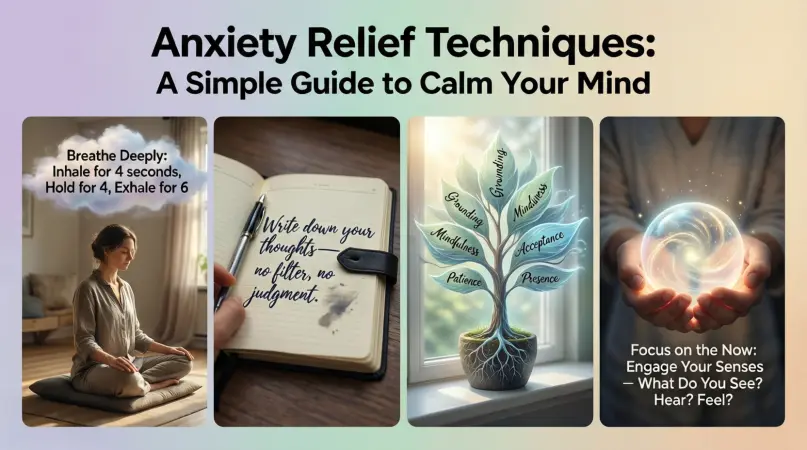
To start, sit comfortably. Inhale slowly through your nose for four seconds. Hold the breath for two seconds. Then exhale through your mouth for six seconds. Repeat this cycle five times.
This method works because slow breathing activates the body’s calm response. It is useful before sleep or during stressful moments.
Step 2: Progressive Muscle Relaxation
This technique focuses on releasing physical tension. Anxiety often hides in tight muscles.
Start with your feet. Tighten the muscles for five seconds, then release. Move slowly upward through legs, stomach, arms, shoulders, and face.
Progressive muscle relaxation improves stress management and body awareness. Practice once a day for best results.
Step 3: Mindful Awareness
Mindful awareness means paying attention to the present moment without judgment. It helps break anxious thought loops.
Focus on what you can see, hear, and feel right now. For example, notice the sound of a fan or the feeling of your feet on the floor.
This is one of the most powerful anxiety relief techniques for mental wellness.
Step 4: Positive Self-Talk
Anxiety often comes with negative thoughts. Positive self-talk helps replace them with supportive messages.
When anxiety appears, say simple phrases like, “I am safe,” or “This feeling will pass.” These words calm the mind over time.
Step 5: Gentle Physical Activity
Movement helps release stress hormones. Walking, stretching, or yoga are excellent calming exercises.
You do not need intense workouts. Even ten minutes of gentle movement can reduce anxiety levels.
Step 6: Daily Routine Building
A stable routine creates a sense of safety. Wake up, eat, and sleep at regular times.
This structure supports stress management and emotional balance.
Benefits of Anxiety Relief Techniques
- Reduce daily stress and nervousness
- Improve focus and concentration
- Support better sleep quality
- Increase emotional control
- Boost confidence in stressful situations
- Strengthen long-term mental wellness
- Improve physical relaxation
- Encourage positive thinking habits
Disadvantages / Risks
- Results may take time
- Inconsistent practice reduces benefits
- Some techniques may feel uncomfortable at first
- Severe anxiety may need professional support
- Overthinking techniques can increase stress
Common Mistakes to Avoid
Many people expect instant results. Anxiety relief techniques work best with patience and regular practice.
Another mistake is using techniques only during panic. Daily use improves stress management more effectively.
Some people stop too soon. Give each method time before judging results.
Avoid comparing yourself to others. Everyone’s anxiety experience is different.
FAQs
What are the fastest anxiety relief techniques?
Deep breathing and grounding exercises work quickly. They calm the nervous system within minutes when practiced correctly.
Can anxiety relief techniques replace medication?
They help manage symptoms but do not replace medical advice. Always consult a professional for severe anxiety.
How often should I practice calming exercises?
Daily practice is ideal. Even five to ten minutes improves mental wellness over time.
Do these techniques work for everyone?
Most people benefit, but results vary. Combining techniques often works best.
Can children use anxiety relief techniques?
Yes, simple breathing and awareness exercises are safe and helpful for children.
When should I seek professional help?
If anxiety interferes with daily life, sleep, or health, professional support is recommended.
You May Also Like It
Best Foods for Energy: Boost Your Vitality Naturally
Nutrition Tips for Beginners: Easy Guide for Healthy Eating
Healthy Diet for Weight Loss: A Simple and Practical Guide
Expert Tips & Bonus Points
Start small and stay consistent. Choose one or two anxiety relief techniques and practice daily.
Track your progress in a journal. Writing helps identify triggers and improvements.
Combine stress management with healthy habits like sleep and nutrition.
Be kind to yourself. Anxiety is not a weakness. It is a signal that needs care.
Practice techniques even on good days. This builds long-term mental wellness.
Conclusion
Anxiety is a natural response, but it should not control your life. Learning and practicing anxiety relief techniques can make a real difference in how you feel each day. These techniques help calm the body, clear the mind, and build emotional strength over time.
The key is consistency. Small daily actions create lasting change. Deep breathing, mindful awareness, gentle movement, and positive self-talk all support stress management in simple ways. When practiced regularly, they improve mental wellness and confidence.
Remember, progress is personal. Some days will feel easier than others. That is normal. What matters is continuing the journey with patience and care.
If anxiety feels overwhelming, seeking support is a wise step. Combining professional guidance with these techniques often brings the best results.
You May Also Like It
Balanced Diet Plan: A Simple and Practical Guide for Everyday Health
Signs of Depression: A Clear and Simple Guide for Everyone
Mental Health Self Care: A Simple and Practical Guide for Everyday Life