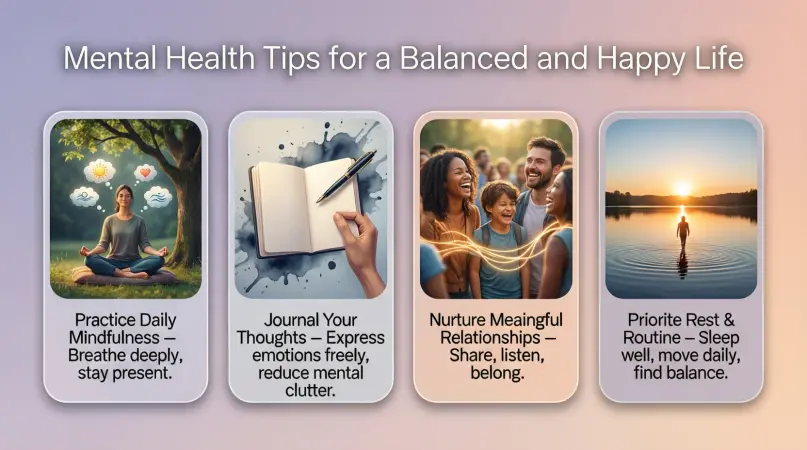

Introduction
Mental health tips are simple actions that help you feel calm, focused, and emotionally strong in daily life. In today’s fast-moving world, many people feel stress, worry, or mental tiredness without fully understanding why. Work pressure, family duties, social media, and money problems can slowly affect how we think and feel. Because of this, taking care of the mind is just as important as taking care of the body.
Good mental health does not mean you are always happy. It means you can handle stress, manage emotions, and recover after hard times. Many beginners think mental health care is only for people with serious problems. That idea is not true. Everyone needs mental care, just like everyone needs sleep and food. Small daily habits can protect your emotional well-being and improve mental wellness over time.
This guide is written in simple English for beginners and intermediate readers. It explains mental health tips in an easy and practical way. You will learn what mental health really means, why it matters, and how to improve it step by step. Each tip is realistic and easy to follow in real life.
By the end of this article, you will have clear mental health tips that fit into normal routines. These ideas can help you manage stress, think more clearly, and build a balanced life. Most importantly, they can help you feel more in control of your thoughts and emotions every single day.
What is Mental Health?
Mental health is the state of your mind, emotions, and thoughts. It affects how you feel, how you act, and how you handle daily challenges. When your mental health is stable, you can focus better, make decisions, and maintain healthy relationships.
Mental health is not just about avoiding illness. It also includes positive mental wellness, emotional balance, and self-awareness. A mentally healthy person can feel sad, angry, or stressed, but still cope in healthy ways. These emotions are normal parts of life.
Mental health includes several areas:
- Emotional health, which is how you manage feelings
- Psychological health, which affects thinking and learning
- Social health, which influences relationships and communication
When these areas work well together, emotional well-being improves. Mental health can change over time. Life events, habits, and environment all play a role. That is why learning mental health tips early is helpful.
Just like physical fitness, mental fitness needs regular care. Ignoring mental health can lead to long-term stress, burnout, or emotional problems. Understanding mental health is the first step toward building a stronger and calmer mind.
You May Also Like It
Daily Exercise Routine: A Simple Guide for a Healthier Life
Protein Rich Foods List for Health & Muscle
Diet Plan for Healthy Life – Simple Steps to Stay Fit
Why is Mental Health Important?
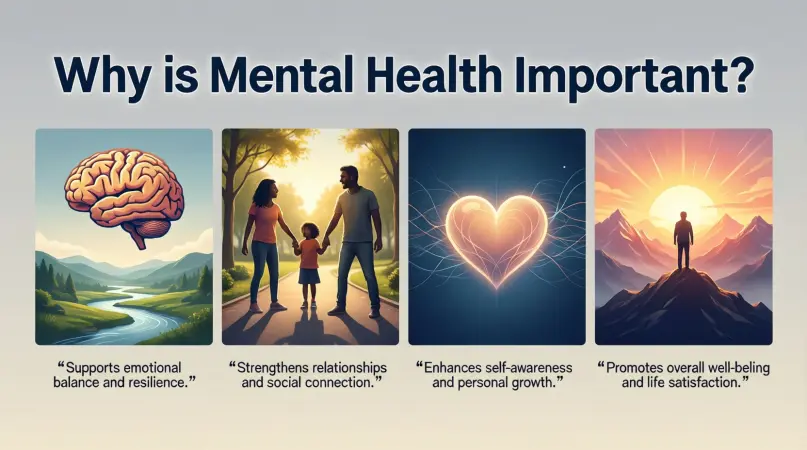
Mental health affects every part of life. It shapes how you work, study, and connect with others. When mental health is poor, even simple tasks can feel heavy and exhausting. On the other hand, good mental health helps you enjoy life more fully.
Strong mental wellness improves focus and productivity. You can solve problems faster and think more clearly. It also helps you manage stress management challenges without feeling overwhelmed. This makes daily life more balanced.
Mental health is important for physical health too. Long-term stress can affect sleep, digestion, and the immune system. Poor emotional well-being can lead to headaches, body pain, or low energy levels. A healthy mind supports a healthy body.
Good mental health also improves relationships. When emotions are balanced, communication becomes easier. You listen better and react calmly instead of with anger or fear.
Most importantly, mental health builds resilience. It helps you recover from failure, loss, or change. Life will always have ups and downs. Mental health tips prepare your mind to handle both with strength and patience.
Detailed Step-by-Step Guide
Step 1: Build Awareness of Your Thoughts
The first step is noticing your thoughts. Many people live on autopilot without realizing what they think all day. Pay attention to patterns in your thinking.
Ask yourself simple questions:
- What am I thinking right now?
- Is this thought helpful or harmful?
- Is it based on facts or fear?
Awareness helps you pause before reacting. This small habit supports emotional well-being and mental wellness.
Step 2: Create a Daily Routine
A simple routine gives structure to the mind. It reduces stress by removing confusion and last-minute decisions.
Include basic habits such as:
- Waking up at the same time
- Eating regular meals
- Setting time for rest
Routines create safety for the brain. They are one of the most effective mental health tips for beginners.
Step 3: Practice Stress Management Daily
Stress is a normal part of life. The goal is not to remove it, but to manage it well. Short stress management practices make a big difference.
Examples include:
- Deep breathing for five minutes
- Short walks outside
- Stretching the body
These actions calm the nervous system and clear the mind.
Step 4: Improve Sleep Quality
Sleep directly affects mental health. Poor sleep increases anxiety, sadness, and anger.
To improve sleep:
- Go to bed at the same time
- Avoid screens before sleep
- Keep the bedroom quiet and dark
Good sleep supports emotional balance and mental clarity.
Step 5: Stay Physically Active
Movement helps the brain release feel-good chemicals. You do not need intense exercise.
Simple options include:
- Walking
- Light stretching
- Home workouts
Physical activity supports mental wellness and reduces daily stress.
Step 6: Eat for Brain Health
Food affects mood and energy. Balanced meals support emotional well-being.
Focus on:
- Fruits and vegetables
- Whole grains
- Enough water
Avoid skipping meals, as this can increase irritability and stress.
Step 7: Set Healthy Boundaries
Boundaries protect mental health. They help you say no without guilt.
Examples of boundaries:
- Limiting work hours
- Reducing negative conversations
- Taking breaks when tired
Healthy boundaries are powerful mental health tips for long-term balance.
Step 8: Stay Socially Connected
Humans need connection. Isolation increases stress and sadness.
Stay connected by:
- Talking with trusted people
- Sharing feelings honestly
- Asking for help when needed
Social support improves emotional strength.
Step 9: Limit Digital Overload
Too much screen time increases anxiety. News and social media can overwhelm the mind.
Try these steps:
- Set screen limits
- Take digital breaks
- Avoid negative content
This supports calm thinking and focus.
Step 10: Practice Self-Compassion
Be kind to yourself. Mistakes are part of learning.
Replace harsh thoughts with gentle ones. Self-compassion builds confidence and emotional well-being.
You May Also Like It
Best Foods for Energy: Boost Your Vitality Naturally
Nutrition Tips for Beginners: Easy Guide for Healthy Eating
Healthy Diet for Weight Loss: A Simple and Practical Guide
Benefits of Mental Health Tips
- Better stress management in daily life
- Improved emotional well-being and mood
- Stronger focus and decision-making
- Healthier relationships and communication
- Increased mental wellness and resilience
- Better sleep and energy levels
Disadvantages / Risks
- Requires consistency and patience
- Results may take time to appear
- Some tips may feel uncomfortable at first
- Lack of support can slow progress
Common Mistakes to Avoid
Many people expect quick results. Mental health improvement takes time. Another mistake is comparing yourself to others. Everyone’s journey is different.
Avoid ignoring small warning signs like constant tiredness or irritability. Also, do not try to fix everything at once. Focus on one or two mental health tips first.
Skipping rest is another common mistake. Rest is not laziness. It is a mental need.
FAQs
What are mental health tips?
Mental health tips are simple habits that protect and improve emotional and mental well-being. They help manage stress and build balance.
How often should I practice mental health tips?
Daily practice is best. Even small actions done regularly create strong results over time.
Can mental health tips replace therapy?
Mental health tips support daily wellness but do not replace professional help when serious issues exist.
How long does it take to see results?
Some people feel better in weeks, others take longer. Consistency matters more than speed.
Are mental health tips suitable for everyone?
Yes, they are helpful for all ages and lifestyles when adjusted to personal needs.
What if I miss a day?
Missing a day is normal. Simply return to your routine without guilt.
Expert Tips & Bonus Points
Start small and stay consistent. Track your habits in a notebook. Celebrate small wins. Reduce self-judgment and focus on progress. Combine mental health tips with healthy lifestyle choices. Ask for help when needed. Mental strength grows with practice.
Conclusion
Mental health tips are not complicated rules. They are simple, daily choices that protect your mind and emotions. When practiced regularly, they build strong mental wellness and emotional balance. Life will always bring challenges, but a healthy mind helps you face them with confidence.
Improving mental health does not require perfection. It requires awareness, patience, and self-care. Small steps like better sleep, stress management, and healthy boundaries make a real difference. Over time, these habits improve focus, relationships, and overall happiness.
Remember that emotional well-being is a journey, not a destination. Some days will feel easier than others. What matters is staying kind to yourself and continuing forward. Mental health tips work best when they fit naturally into your life.
You May Also Like It
Balanced Diet Plan: A Simple and Practical Guide for Everyday Health
Signs of Depression: A Clear and Simple Guide for Everyone
Mental Health Self Care: A Simple and Practical Guide for Everyday Life