
Introduction
The debate around gym vs home workout has become more popular than ever. With busy schedules, rising gym costs, and easy access to online fitness content, many people are confused about which option is best. Some love the energy of a gym, while others prefer the comfort of exercising at home. Both options can help you stay fit, lose weight, and build strength, but they work in different ways.
For beginners and intermediate fitness lovers, choosing between a gym vs home workout can feel overwhelming. You may ask questions like: Do I need expensive equipment? Will I stay motivated at home? Is the gym worth the money? These are valid concerns, and the answers depend on your goals, lifestyle, and personality.
This article explains the gym vs home workout topic in simple English. You will learn what each option means, why it matters, and how to choose the right one step by step. We will cover benefits, disadvantages, common mistakes, and expert tips to help you make a smart decision.
Whether your goal is fat loss, muscle building, or staying active, understanding gym vs home workout differences can save time, money, and frustration. By the end, you will have a clear idea of which fitness path fits your life best and how to stay consistent for long-term results.
What is Gym vs Home Workout?
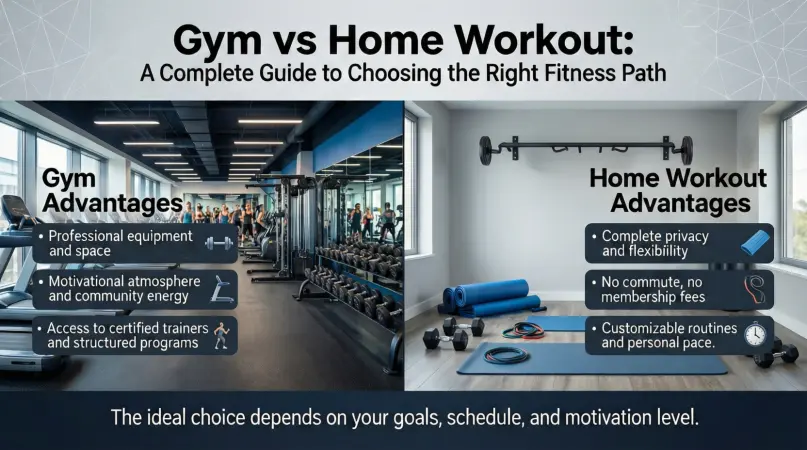
Gym vs home workout simply means comparing two popular ways of exercising. A gym workout takes place in a fitness center with professional equipment, trainers, and a structured environment. A home workout is done at your house using bodyweight exercises, small equipment, or online workout programs.
In a gym workout, you usually have access to machines, free weights, cardio equipment, and group classes. This setting is designed for focused training and offers variety. On the other hand, a home workout relies on limited space and tools but offers flexibility and comfort.
The gym vs home workout choice is not about which one is superior. It is about which one suits your needs. Some people feel motivated in a gym environment, while others feel relaxed and consistent at home. Both can improve fitness if done correctly.
Understanding gym vs home workout options helps you avoid unrealistic expectations. For example, muscle building may be faster in a gym due to heavier weights, while home workouts are great for general fitness and fat loss. Knowing these basics makes it easier to plan your fitness journey.
You May Also Like It
Daily Exercise Routine: A Simple Guide for a Healthier Life
Protein Rich Foods List for Health & Muscle
Diet Plan for Healthy Life – Simple Steps to Stay Fit
Why is Gym vs Home Workout Important?
The gym vs home workout decision is important because it affects consistency, results, and overall health. Many people start exercising but quit because they choose the wrong setup. When your workout style matches your lifestyle, you are more likely to stay active.
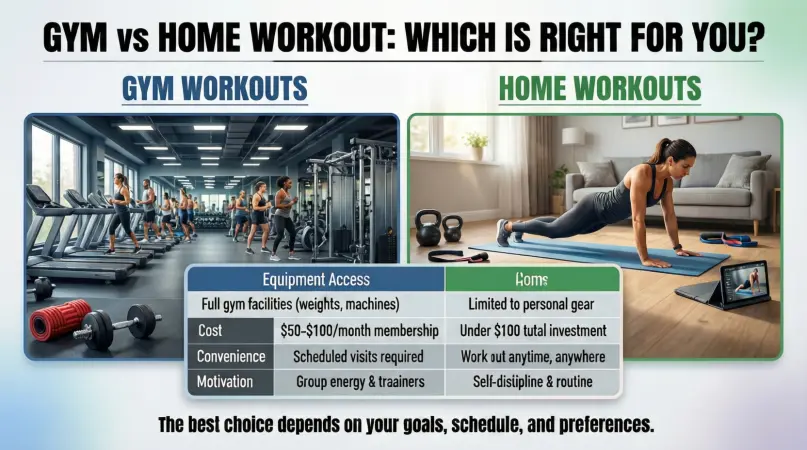
Time management is one key reason this topic matters. A gym workout requires travel time, fixed hours, and planning. A home workout saves time and allows you to exercise anytime. If your schedule is busy, the wrong choice can lead to missed workouts.
Cost is another important factor. Gym memberships, transport, and supplements can be expensive. Home workouts are often low-cost or free. Understanding gym vs home workout costs helps you avoid financial stress while staying fit.
Motivation also plays a big role. Some people need social interaction and trainers to stay motivated. Others prefer privacy and flexibility. Choosing the right environment improves mental health and confidence.
Finally, safety and progress depend on your choice. Beginners may need guidance from trainers in a gym, while experienced people can manage home workouts safely. This is why learning about gym vs home workout is essential before starting.
Detailed Step-by-Step Guide
Step 1: Define Your Fitness Goals
Start by identifying what you want to achieve. Goals shape the gym vs home workout decision.
- Weight loss and general fitness work well with home workouts.
- Muscle building and strength training are easier in a gym.
- Flexibility and mobility can be improved in both settings.
Write down clear goals like losing 5 kg, building muscle, or improving stamina.
Step 2: Evaluate Your Schedule
Time availability matters a lot in gym vs home workout planning.
- Gym workouts need travel time and fixed hours.
- Home workouts can fit into short breaks or early mornings.
If you struggle with time, home workouts may be more realistic.
Step 3: Consider Your Budget
Money can limit your options.
- Gym workouts include membership fees and extra costs.
- Home workouts need minimal investment like mats or dumbbells.
Choose an option you can afford long term without stress.
Step 4: Assess Motivation Style
Your personality affects consistency.
- Gym workouts offer social energy and accountability.
- Home workouts suit self-motivated individuals.
Be honest about what keeps you consistent.
Step 5: Check Space and Equipment
Space is important for safe exercise.
- Gym workouts offer professional equipment.
- Home workouts need enough room to move freely.
Make sure your chosen setup supports your routine.
Step 6: Start Simple and Track Progress
Begin with basic exercises and increase intensity slowly.
- Track workouts, weight, or reps weekly.
- Adjust your gym vs home workout plan based on results.
Consistency matters more than perfection.
Benefits of Gym vs Home Workout
Benefits of Gym Workout
- Access to advanced equipment
- Professional trainers for guidance
- Social motivation and group classes
- Structured workout environment
- Easier muscle progression
Benefits of Home Workout
- Saves time and travel effort
- Low or no cost
- Flexible workout schedule
- Privacy and comfort
- Easy to maintain consistency
Both sides of the gym vs home workout debate offer strong benefits. The key is choosing what fits your life.
Disadvantages / Risks
Disadvantages of Gym Workout
- Monthly membership costs
- Travel time and crowd issues
- Intimidation for beginners
- Fixed timings
- Risk of overtraining
Disadvantages of Home Workout
- Limited equipment
- Lack of professional supervision
- Distractions at home
- Motivation challenges
- Slower muscle growth
Knowing these risks helps you plan better and avoid frustration in your gym vs home workout journey.
Common Mistakes to Avoid
Many people fail because of simple mistakes.
- Choosing gym vs home workout based on trends
- Setting unrealistic goals
- Ignoring warm-ups and recovery
- Switching plans too often
- Not tracking progress
Avoiding these mistakes improves results and confidence.
You May Also Like It
Best Foods for Energy: Boost Your Vitality Naturally
Nutrition Tips for Beginners: Easy Guide for Healthy Eating
Healthy Diet for Weight Loss: A Simple and Practical Guide
FAQs
Is gym vs home workout better for beginners?
Beginners can start with both options. Home workouts are gentle and comfortable, while gyms offer guidance. Choose based on confidence and budget.
Can I build muscle with a home workout?
Yes, but progress may be slower. Bodyweight exercises and resistance bands help, but gyms offer heavier weights.
Which is cheaper, gym or home workout?
Home workouts are generally cheaper. Gym memberships add recurring costs, while home workouts need minimal investment.
Is motivation higher in a gym workout?
For many people, yes. Social energy and trainers help. However, self-motivated people do well at home.
How often should I work out?
Both gym vs home workout routines work best with 3 to 5 sessions per week, depending on goals and recovery.
Can I combine gym and home workouts?
Yes, combining both offers flexibility. Many people do gym workouts on weekdays and home workouts on busy days.
Expert Tips & Bonus Points
Experts recommend focusing on consistency over location. Choose a gym vs home workout setup you enjoy. Start slow, master form, and increase intensity gradually. Keep workouts simple and realistic. Rest days are important for recovery and growth.
Mix cardio, strength, and flexibility exercises for balanced fitness. Stay hydrated, eat balanced meals, and sleep well. Remember, results take time, so be patient.
Tracking progress with photos or notes keeps motivation high. Adjust routines every few weeks to avoid boredom. Most importantly, enjoy the process.
Conclusion
The gym vs home workout decision is personal and depends on your goals, lifestyle, and mindset. Both options can deliver excellent results if done consistently and correctly. A gym workout offers structure, equipment, and social motivation, making it ideal for muscle building and guided training. A home workout provides flexibility, comfort, and affordability, making it perfect for busy schedules and beginners.
Instead of asking which one is better, ask which one you can maintain long term. Fitness is not about short-term effort but about building healthy habits. The best workout is the one you actually do.
By understanding the pros, cons, and steps explained in this guide, you can confidently choose between gym vs home workout. Stay focused, stay consistent, and remember that progress comes from dedication, not location. Your fitness journey is unique, and the right choice is the one that keeps you moving forward every day.
You May Also Like It
Balanced Diet Plan: A Simple and Practical Guide for Everyday Health
Signs of Depression: A Clear and Simple Guide for Everyone
Mental Health Self Care: A Simple and Practical Guide for Everyday Life