
Introduction
Starting a fitness journey can feel confusing, especially when you see hundreds of routines online. Many people quit early because workouts feel too complex or time consuming. That is where a full body workout plan becomes helpful. It is simple, effective, and suitable for almost everyone. Whether you are new to exercise or returning after a break, this approach makes training easier to follow and easier to stick with.
A full body workout plan focuses on training all major muscle groups in one session. Instead of splitting workouts into chest day, leg day, or arm day, you train your entire body together. This saves time and helps build balanced strength. For beginners, it reduces confusion. For intermediate readers, it improves consistency and performance.
Another reason people love this plan is flexibility. You can train at home or in the gym. You can use bodyweight, dumbbells, or machines. You can also adjust intensity based on your fitness level. This makes the full body workout plan one of the most practical fitness strategies today.
In this guide, you will learn exactly what a full body workout plan is, why it matters, and how to follow it step by step. You will also discover benefits, risks, common mistakes, and expert tips. Everything is explained in simple English, with clear examples, so you can start with confidence and train safely.
What is a Full Body Workout Plan?
A full body workout plan is an exercise routine that trains all major muscle groups in a single session. These muscle groups include the chest, back, shoulders, arms, legs, and core. Instead of isolating one area, the body works together as one unit.
This type of training usually includes compound exercises. Compound movements work multiple muscles at the same time. For example, squats train legs and core, while push-ups work chest, shoulders, and arms. Because of this, full body workouts are efficient and time saving.
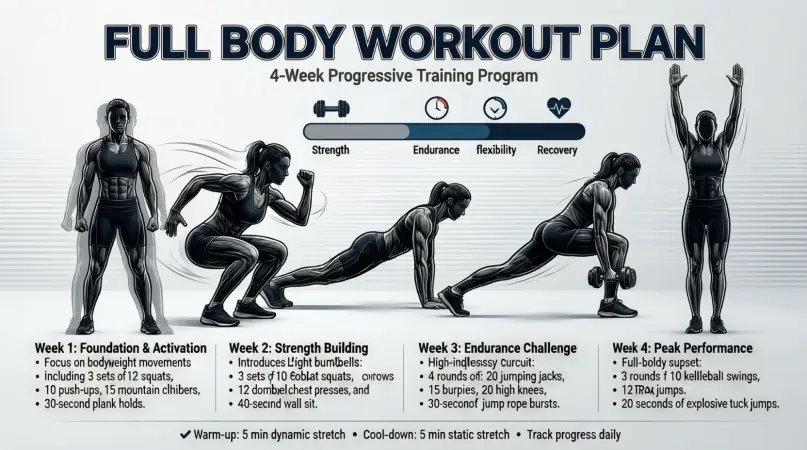
A typical full body workout routine is performed two to four times per week. Rest days are placed between sessions to allow muscles to recover. This balance of training and rest helps improve strength, endurance, and overall fitness.
Both beginners and intermediate trainees can benefit from this plan. Beginners learn proper movement patterns, while intermediate users can increase intensity with weights, reps, or advanced variations.
You May Also Like It
Daily Exercise Routine: A Simple Guide for a Healthier Life
Protein Rich Foods List for Health & Muscle
Diet Plan for Healthy Life – Simple Steps to Stay Fit
Why is a Full Body Workout Plan Important?
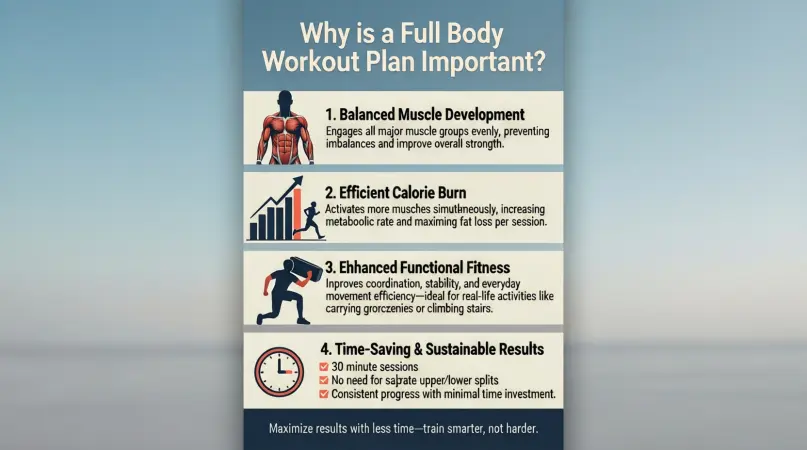
A full body workout plan is important because it supports balanced fitness. Many people overtrain one muscle group and ignore others. This can lead to poor posture, weakness, and injury. Training the whole body prevents these issues.
Another key benefit is consistency. When workouts are simple and short, people are more likely to stick with them. A full body plan reduces decision fatigue and keeps motivation high.
This approach also supports fat loss and muscle building together. Since multiple muscles work in each session, calorie burn is higher. At the same time, muscles get enough stimulus to grow stronger.
For busy people, this plan is ideal. You do not need to spend hours in the gym. Even three sessions per week can produce visible results when done correctly.
Detailed Step-by-Step Guide
Step 1: Warm-Up Properly
Warming up prepares your body for exercise. It increases blood flow and reduces injury risk.
A good warm-up includes:
- Light cardio for five minutes
- Arm circles and shoulder rolls
- Hip rotations and leg swings
Keep movements slow and controlled.
Step 2: Choose Compound Exercises
Compound exercises form the base of a full body workout plan. They train many muscles together.
Examples include:
- Squats
- Push-ups
- Rows
- Lunges
- Overhead presses
Choose exercises that feel comfortable and safe.
Step 3: Structure Your Workout
A simple structure works best:
- Lower body exercise
- Upper body push movement
- Upper body pull movement
- Core exercise
Perform three sets of each movement with proper rest.
Step 4: Adjust Reps and Sets
Beginners should aim for:
- 8 to 12 repetitions
- 2 to 3 sets
Intermediate users can increase:
- Weight
- Repetitions
- Training intensity
Step 5: Cool Down and Stretch
Cooling down helps muscles relax and recover. Stretch major muscle groups for five to ten minutes. Focus on breathing and gentle movements.
Benefits of a Full Body Workout Plan
- Trains all muscles evenly
- Saves time and energy
- Improves strength and endurance
- Supports fat loss and muscle tone
- Suitable for home and gym workouts
- Easy to modify for any fitness level
Disadvantages / Risks
- Can feel tiring at first
- Requires proper recovery
- Poor form may increase injury risk
- Not ideal for advanced bodybuilders
These risks can be reduced with proper planning and rest.
Common Mistakes to Avoid
One common mistake is skipping warm-ups. Cold muscles are more likely to get injured. Another mistake is using heavy weights too soon. Progress should be gradual.
Many people also train too often. A full body workout routine needs rest days. Training every day can slow progress instead of improving it.
Ignoring proper form is another issue. Quality movement is more important than speed or weight. Always focus on technique first.
You May Also Like It
Best Foods for Energy: Boost Your Vitality Naturally
Nutrition Tips for Beginners: Easy Guide for Healthy Eating
Healthy Diet for Weight Loss: A Simple and Practical Guide
FAQs
How many days per week should I do a full body workout plan?
Most people see great results training three times per week. Beginners may start with two sessions, while intermediate users can train up to four times weekly.
Can I build muscle with a full body workout plan?
Yes, muscle growth is possible when workouts include progressive overload, proper nutrition, and enough rest. Compound exercises are especially effective.
Is this plan good for weight loss?
A full body workout plan supports fat loss by burning more calories per session. When combined with a healthy diet, it can be very effective.
Can beginners follow this plan safely?
Yes, beginners benefit greatly from full body training. Start with bodyweight exercises and focus on learning correct form.
Do I need gym equipment?
No equipment is required. You can use bodyweight movements at home. Dumbbells or resistance bands can be added later.
How long should each workout last?
Most sessions last between forty five and sixty minutes, including warm-up and stretching.
Expert Tips & Bonus Points
Stay consistent and patient. Results take time, but consistency always wins. Track your workouts to monitor progress. Increase difficulty slowly to avoid injury.
Focus on sleep and hydration. Recovery is just as important as training. Listen to your body and rest when needed.
Mix variations to stay motivated. Change exercises every few weeks while keeping the same structure.
Conclusion
A full body workout plan is one of the smartest ways to improve fitness for beginners and intermediate readers. It offers simplicity, balance, and flexibility. By training all major muscles together, you save time and reduce confusion. This makes workouts easier to follow and easier to maintain long term.
This type of training supports strength, endurance, and fat loss without requiring complex schedules. Whether you exercise at home or in the gym, you can adapt the plan to your lifestyle and goals. The key is consistency, proper form, and gradual progress.
By following the steps in this guide, avoiding common mistakes, and applying expert tips, you can build a strong and healthy body safely. Remember that fitness is a journey, not a race. Stay focused, stay patient, and trust the process. A well structured full body workout plan can help you feel stronger, more confident, and more energetic every day.
You May Also Like It
Balanced Diet Plan: A Simple and Practical Guide for Everyday Health
Signs of Depression: A Clear and Simple Guide for Everyone
Mental Health Self Care: A Simple and Practical Guide for Everyday Life