
Introduction
Living a healthy life starts with the choices we make every day, and one of the most important choices is the food we eat. A well-planned diet can improve energy, support mental clarity, maintain weight, and even prevent chronic diseases. Many people struggle with knowing what to eat, how much to eat, and which foods are best for their body. This is where a proper diet plan for healthy life comes in.
A diet plan is not about strict restrictions or skipping meals. It is about balancing the right nutrients, enjoying food, and creating a sustainable routine. For beginners, it may feel overwhelming at first, but with a simple step-by-step approach, anyone can achieve a healthier lifestyle. A diet plan helps you manage your calorie intake, strengthen your immunity, and improve digestion. Moreover, it reduces the risk of lifestyle diseases like diabetes, heart problems, and obesity.
In this article, we will explain what a diet plan for healthy life is, why it matters, and how you can implement one easily. We will cover step-by-step guides, the benefits, risks, common mistakes, expert tips, and frequently asked questions. By the end, you will have a clear understanding of how to eat right and live better without stress or confusion.
Whether you are a beginner or have some experience in healthy eating, this guide will give you actionable insights to follow. Let’s start building your path to a healthier life with smart dietary choices.
What is a Diet Plan for Healthy Life?
A diet plan for healthy life is a structured eating schedule designed to provide all essential nutrients your body needs. It balances carbohydrates, proteins, fats, vitamins, and minerals. Unlike fad diets or crash diets, this type of plan focuses on long-term well-being rather than quick weight loss.
Key components of a diet plan include:
- Balanced Meals: Including fruits, vegetables, grains, and proteins.
- Portion Control: Eating the right amount of calories for your body type.
- Hydration: Drinking enough water to support metabolism and digestion.
- Meal Timing: Eating at regular intervals to maintain energy levels.
A proper diet plan considers your lifestyle, activity level, and personal health goals. It is flexible and allows room for occasional treats while keeping overall nutrition on track.
You May Also Like It
Daily Exercise Routine: A Simple Guide for a Healthier Life
Protein Rich Foods List for Health & Muscle
Ways to Improve Mental Health: Simple and Practical Steps for Daily Life
Why is a Diet Plan Important?
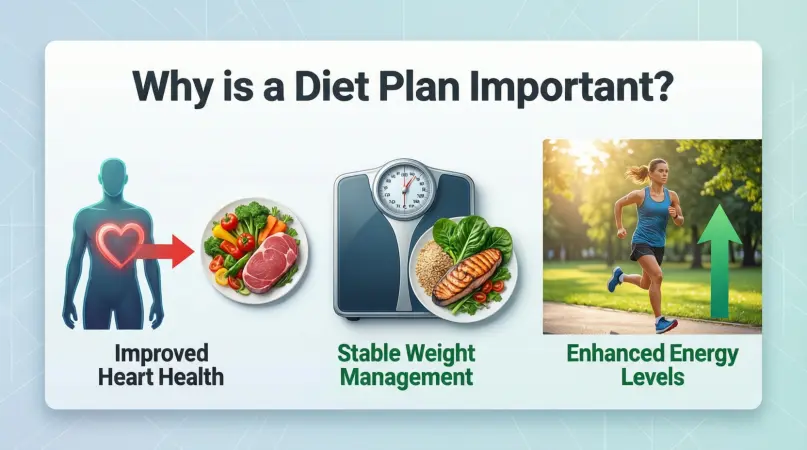
A healthy diet is more than just food; it is a foundation for physical and mental wellness. Here’s why a diet plan for healthy life is crucial:
- Weight Management: It helps maintain an ideal weight by balancing calorie intake.
- Boosts Energy: Nutritious foods fuel your body and reduce fatigue.
- Strengthens Immunity: Essential vitamins and minerals support the immune system.
- Prevents Chronic Diseases: Reduces the risk of diabetes, heart disease, and obesity.
- Improves Mental Health: Nutrient-rich foods positively affect mood and cognitive function.
- Enhances Digestion: Proper fiber intake promotes gut health and regular bowel movements.
A diet plan encourages mindful eating and reduces unhealthy cravings. Without a structured plan, it is easy to fall into habits of overeating, consuming junk food, or missing essential nutrients.
Detailed Step-by-Step Guide
Creating a diet plan for healthy life may seem complicated, but following these steps can make it simple and effective.
Step 1: Understand Your Calorie Needs
Every person has a unique daily calorie requirement based on age, gender, weight, and activity level. You can calculate this using online tools or consult a nutritionist. A general guide is:
- Sedentary women: 1,800–2,000 calories/day
- Sedentary men: 2,200–2,400 calories/day
- Active individuals: Add 200–500 calories depending on activity
Knowing your calorie needs helps you plan meals without overeating.
Step 2: Include All Nutrient Groups
A balanced diet includes:
- Proteins: Lean meats, eggs, fish, lentils, and dairy.
- Carbohydrates: Whole grains like brown rice, oats, and quinoa.
- Fats: Healthy fats from nuts, seeds, olive oil, and avocado.
- Fruits & Vegetables: Provide vitamins, minerals, and fiber.
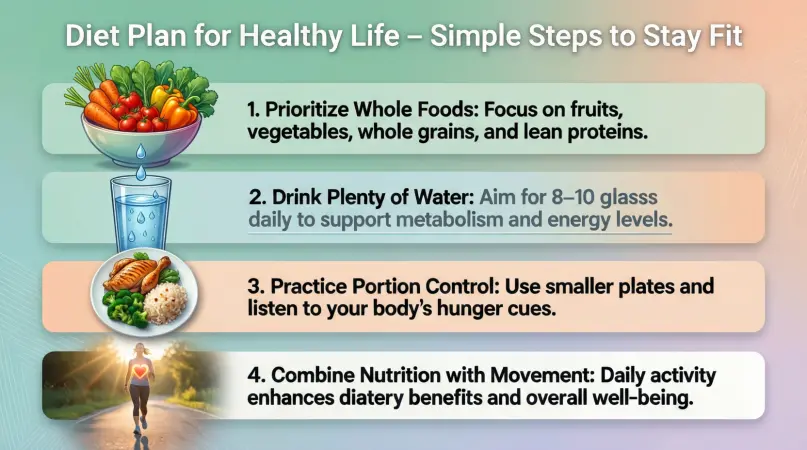
- Water: Aim for 8–10 glasses a day to stay hydrated.
Example of a balanced meal:
- Breakfast: Oatmeal with berries and a boiled egg
- Lunch: Grilled chicken with quinoa and steamed vegetables
- Dinner: Baked salmon with brown rice and salad
- Snacks: Nuts, fruits, or yogurt
Step 3: Plan Meal Timing
Eating at consistent times improves digestion and metabolism. A typical schedule could be:
- Breakfast: Within 1 hour of waking up
- Mid-Morning Snack: Optional, fruits or nuts
- Lunch: 12–1 PM
- Afternoon Snack: Yogurt or a protein bar
- Dinner: 7–8 PM
Avoid eating late at night, as it can lead to weight gain and poor digestion.
Step 4: Portion Control
Even healthy foods can cause weight gain if portions are too large. Use these tips:
- Fill half your plate with vegetables
- One-quarter with protein
- One-quarter with whole grains
- Limit high-calorie condiments and sugar
Using smaller plates or measuring cups can help control portions effectively.
Step 5: Limit Processed and Junk Foods
Processed foods are high in sugar, unhealthy fats, and salt. Limit items like:
- Fast food
- Packaged snacks
- Sugary drinks
- Pastries and candies
Replace them with fresh, whole foods for better health outcomes.
Step 6: Include Healthy Snacks
Healthy snacks prevent overeating at main meals. Options include:
- Fruits like apples, bananas, and berries
- Nuts like almonds, walnuts, and cashews
- Yogurt or cottage cheese
- Carrot or cucumber sticks with hummus
Snacking mindfully can maintain energy and reduce cravings for unhealthy items.
Step 7: Monitor and Adjust
Track your progress and adjust your diet plan as needed. You can use apps or a journal to log meals and calorie intake. Over time, you’ll learn which foods make you feel energized and satisfied.
You May Also Like It
Best Foods for Energy: Boost Your Vitality Naturally
Nutrition Tips for Beginners: Easy Guide for Healthy Eating
Healthy Diet for Weight Loss: A Simple and Practical Guide
Benefits of a Diet Plan for Healthy Life
Following a structured diet plan offers many advantages:
- Weight Control: Helps reach and maintain a healthy weight
- Boosts Immunity: Vitamins and minerals strengthen your body
- Improves Heart Health: Reduces cholesterol and blood pressure
- Enhances Energy: Sustained energy throughout the day
- Supports Mental Health: Reduces stress and anxiety
- Better Digestion: Promotes gut health and regularity
- Longevity: Reduces risk of chronic diseases and improves life quality
Disadvantages / Risks
While beneficial, improper diet plans can have risks:
- Nutrient Deficiency: Skipping food groups can lead to deficiencies
- Over-Restriction: Extreme diets may cause fatigue and mood swings
- Unrealistic Goals: Trying to lose too much weight too fast can be harmful
- Digestive Issues: Sudden dietary changes may upset your stomach
- Medical Conditions: Some diets may not suit people with specific health issues like diabetes or kidney disease
Common Mistakes to Avoid
Avoid these errors to make your diet plan effective:
- Skipping meals, especially breakfast
- Overeating “healthy” foods
- Ignoring hydration
- Following fad diets without guidance
- Eating late at night regularly
- Not including enough fiber
- Relying on supplements instead of whole foods
FAQs
1. Can I lose weight with a diet plan for healthy life?
Yes. A balanced diet with controlled portions can promote healthy weight loss. Avoid crash diets; gradual changes are more sustainable.
2. How many meals should I eat in a day?
3 main meals with 1–2 healthy snacks is ideal. Consistency helps maintain energy and metabolism.
3. Are cheat meals allowed?
Yes, occasional cheat meals are fine. They prevent cravings and help maintain long-term adherence.
4. Can I follow a vegetarian diet plan for healthy life?
Absolutely. Focus on plant proteins like lentils, beans, tofu, nuts, and seeds while including whole grains, fruits, and vegetables.
5. How important is water intake?
Very important. Water supports digestion, metabolism, detoxification, and keeps skin healthy. Aim for at least 8–10 glasses daily.
6. Can a diet plan improve mental health?
Yes. Nutrient-rich foods improve brain function, mood, and reduce stress. Omega-3 fatty acids, vitamins, and antioxidants play a key role.
7. Do I need supplements if I follow a diet plan?
Not usually. A well-balanced diet provides most nutrients. Supplements may be needed only if deficiencies exist, as advised by a doctor.
8. How long does it take to see results?
Visible changes may take 4–6 weeks. Energy levels and digestion may improve sooner, while weight or health markers take time.
Expert Tips & Bonus Points
- Plan Ahead: Prepare meals weekly to avoid unhealthy choices.
- Mindful Eating: Eat slowly and focus on your food to prevent overeating.
- Seasonal Foods: Use seasonal fruits and vegetables for better nutrients and cost-efficiency.
- Cook at Home: Home-cooked meals are healthier than restaurant food.
- Stay Active: Combine your diet with regular physical activity for better results.
- Track Progress: Note changes in energy, weight, and mood to fine-tune your plan.
- Listen to Your Body: Hunger and fullness cues help you avoid overeating.
Bonus: Incorporate probiotics like yogurt or kefir for gut health and immunity. Include a variety of colorful vegetables to ensure you get a wide range of nutrients.
Conclusion
A diet plan for healthy life is not just about losing weight or eating less; it is about creating a sustainable lifestyle that nourishes your body and mind. By including a balance of proteins, carbs, healthy fats, fruits, vegetables, and staying hydrated, you can enjoy long-term health benefits.
Consistency is key. Avoid quick fixes, fad diets, or extreme restrictions. Instead, focus on gradual changes, portion control, and mindful eating. Over time, a well-structured diet plan improves energy, mental clarity, immunity, and reduces the risk of chronic diseases.
Remember, everyone’s body is different. Personalize your diet based on your needs, preferences, and health goals. Small, consistent steps lead to lasting results. With careful planning, patience, and dedication, a diet plan for healthy life becomes a tool for better living, happier days, and a stronger, healthier body.
You May Also Like It
Balanced Diet Plan: A Simple and Practical Guide for Everyday Health
Signs of Depression: A Clear and Simple Guide for Everyone
Mental Health Self Care: A Simple and Practical Guide for Everyday Life