
Introduction
Eating well can feel overwhelming for beginners. From trendy diets to conflicting advice, knowing what works for your body seems complicated. But the truth is, healthy eating doesn’t have to be hard. With the right nutrition tips for beginners, you can start making better food choices, feel energized, and improve your overall health without drastic changes.
Nutrition affects every part of your life. It influences energy levels, mental clarity, weight management, and even mood. Starting with small, achievable steps is key. By understanding the basics, you can make long-lasting habits that are sustainable.
This guide will break down everything beginners need to know. You’ll learn what nutrition really means, why it’s essential, and how to plan meals effectively. We’ll also explore common mistakes beginners make, risks of poor nutrition, and expert strategies to help you stay consistent. Whether you want to improve your diet, lose weight, or simply feel healthier, these nutrition tips for beginners are your roadmap to success.
By the end of this article, you’ll have a complete toolkit to make informed decisions, create balanced meals, and enjoy food without guilt. Let’s take the first step toward a healthier lifestyle with simple, actionable guidance.
What is Nutrition?
Nutrition is the process of consuming, digesting, and using food to fuel your body. It is the foundation of good health and energy. Food provides the nutrients your body needs to function properly, repair tissues, and maintain overall well-being.
There are six main types of nutrients:
- Carbohydrates – The body’s main energy source. Found in grains, fruits, vegetables, and legumes.
- Proteins – Essential for muscle building, tissue repair, and hormone production. Sources include meat, fish, eggs, and plant-based options like beans and lentils.
- Fats – Necessary for brain health, hormone balance, and energy storage. Healthy fats come from nuts, seeds, avocado, and olive oil.
- Vitamins – Organic compounds that support immunity, growth, and energy production. Common vitamins include A, C, D, and E.
- Minerals – Inorganic substances like calcium, magnesium, and iron, crucial for bone health, nerve function, and oxygen transport.
- Water – Vital for hydration, digestion, and nutrient transport.
Good nutrition is not about strict dieting; it’s about balance. It means providing your body with what it needs while enjoying your meals. For beginners, focusing on whole, minimally processed foods is the simplest and most effective approach.
You May Also Like It
Daily Exercise Routine: A Simple Guide for a Healthier Life
Protein Rich Foods List for Health & Muscle
Diet Plan for Healthy Life – Simple Steps to Stay Fit
Why is Nutrition Important?
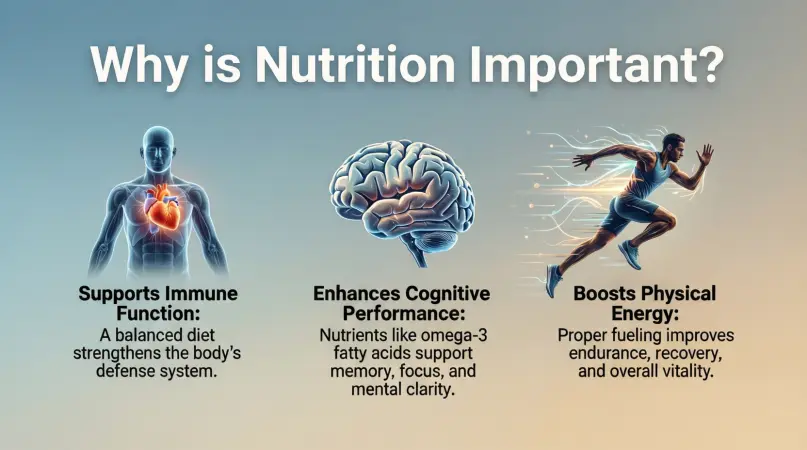
Proper nutrition impacts every aspect of health. Here are key reasons why it matters:
- Energy and Performance – Eating the right foods fuels your body and brain. Poor nutrition can lead to fatigue, poor concentration, and decreased productivity.
- Weight Management – Balanced nutrition helps maintain a healthy weight by controlling hunger and metabolism.
- Disease Prevention – A nutrient-rich diet reduces the risk of chronic diseases like heart disease, diabetes, and certain cancers.
- Mental Health – Nutrition affects mood and cognitive function. Deficiencies in key nutrients can contribute to stress, anxiety, and depression.
- Growth and Recovery – Proteins, vitamins, and minerals support growth, repair tissues, and improve recovery after exercise or illness.
- Longevity – A healthy diet contributes to a longer, more active life.
For beginners, understanding why nutrition matters makes it easier to commit to healthy eating habits. When you know the benefits, making small, sustainable changes becomes rewarding instead of overwhelming.
Detailed Step-by-Step Guide
Step 1: Start With a Balanced Plate
A balanced plate ensures you get essential nutrients without overcomplicating meals.
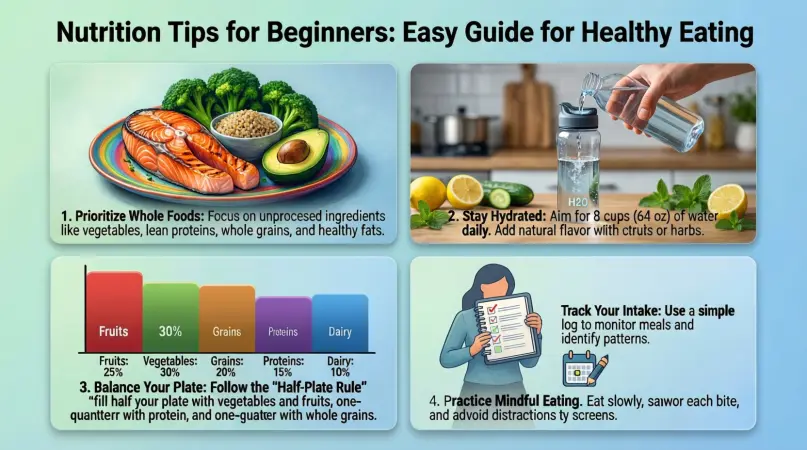
- Half your plate: Fruits and vegetables
- Quarter of your plate: Lean proteins
- Quarter of your plate: Whole grains
- Add healthy fats: Nuts, seeds, or olive oil
- Drink water instead of sugary beverages
This simple approach is easy to follow and works for most meals.
Step 2: Understand Portion Sizes
Overeating healthy foods can still lead to weight gain. Beginners should learn portion control:
- Protein: About the size of your palm
- Carbohydrates: One fist size
- Vegetables: Two fists
- Fats: Thumb size
Using visual cues helps avoid measuring food constantly while still keeping portions in check.
Step 3: Include a Variety of Foods
Eating different foods ensures you get all nutrients. Beginners often stick to a few favorites, which can create deficiencies. Tips for variety:
- Rotate vegetables and fruits daily
- Try different protein sources like fish, tofu, beans, or eggs
- Include multiple whole grains like quinoa, oats, or brown rice
- Mix healthy fats from avocado, nuts, and olive oil
Variety also keeps meals interesting and prevents boredom.
Step 4: Limit Processed and Sugary Foods
Highly processed foods are high in sugar, salt, and unhealthy fats. Reducing them improves energy and overall health. Beginner-friendly tips:
- Swap sugary drinks for water or herbal tea
- Choose whole fruits instead of fruit juices
- Opt for homemade meals instead of fast food
- Check labels for added sugar and sodium
Small changes over time are more sustainable than drastic restrictions.
Step 5: Plan Your Meals
Meal planning makes healthy eating easier and reduces the temptation for unhealthy choices. Beginners can start small:
- Plan breakfast, lunch, and dinner for 3–4 days
- Include a variety of proteins, grains, and vegetables
- Prep snacks like nuts, yogurt, or cut veggies
- Use leftovers wisely to save time
Consistency is easier when meals are prepared ahead of time.
Step 6: Hydrate Properly
Water is often overlooked but essential. Tips for beginners:
- Drink at least 8 glasses (2 liters) daily
- Include herbal teas or water-rich fruits like watermelon
- Drink water before meals to prevent overeating
Hydration boosts digestion, energy, and skin health.
Step 7: Listen to Your Body
Beginners often follow strict rules, ignoring hunger cues. Learning to listen to your body helps maintain a healthy relationship with food:
- Eat when you are hungry
- Stop when you are full
- Avoid emotional eating by finding other coping methods like walking or journaling
Mindful eating improves digestion and satisfaction.
Step 8: Supplement Wisely
Supplements can help fill nutritional gaps but aren’t a substitute for real food. Beginners may benefit from:
- Multivitamins if diet lacks variety
- Omega-3 fatty acids for heart and brain health
- Vitamin D, especially in low-sunlight areas
Consult a healthcare provider before starting any supplements.
You May Also Like It
Best Foods for Energy: Boost Your Vitality Naturally
Ways to Improve Mental Health: Simple and Practical Steps for Daily Life
Healthy Diet for Weight Loss: A Simple and Practical Guide
Benefits of Nutrition
Eating well provides numerous benefits. Key advantages include:
- Improved Energy Levels – Eat balanced meals and feel active throughout the day.
- Better Mood and Focus – Proper nutrients support brain health and reduce stress.
- Weight Control – Helps maintain a healthy weight naturally.
- Stronger Immunity – Vitamins and minerals support the immune system.
- Enhanced Physical Performance – Proper fuel improves workouts and recovery.
- Reduced Risk of Chronic Diseases – Supports heart, bone, and metabolic health.
- Healthy Skin, Hair, and Nails – Nutrients promote overall appearance.
Even small improvements in nutrition can lead to noticeable health changes over time.
Disadvantages / Risks
Poor nutrition can cause short- and long-term problems. Risks include:
- Weight Gain or Obesity – Consuming high-calorie, low-nutrient foods
- Fatigue – Lack of essential vitamins and minerals
- Digestive Issues – Low fiber intake can cause constipation
- Nutrient Deficiencies – Leading to weak bones, hair loss, and poor immunity
- Mental Health Problems – Increased anxiety, depression, or mood swings
- Chronic Diseases – Higher risk of heart disease, diabetes, and certain cancers
Awareness of these risks helps beginners stay motivated to make healthier choices.
Common Mistakes to Avoid
Beginners often make avoidable errors:
- Skipping Meals – Can slow metabolism and increase overeating later.
- Following Extreme Diets – Restrictive diets are unsustainable and risky.
- Ignoring Portion Sizes – Even healthy foods can contribute to weight gain if portions are too large.
- Relying on Supplements Alone – Whole foods provide nutrients in natural, bioavailable forms.
- Neglecting Hydration – Forgetting water can lead to fatigue and poor digestion.
- Not Tracking Progress – Tracking helps identify habits and areas for improvement.
- Expecting Immediate Results – Nutrition changes take time; patience is essential.
Avoiding these mistakes makes the journey smoother and more effective.
FAQs
1. How can beginners start eating healthy?
Start with small, manageable changes. Focus on whole foods, balanced plates, portion control, and proper hydration. Gradually reduce processed foods.
2. Do I need to count calories?
Counting calories isn’t necessary for everyone. Beginners should focus on food quality, balanced meals, and listening to hunger cues rather than obsessing over numbers.
3. Can I still enjoy snacks?
Yes! Choose healthy snacks like fruits, nuts, yogurt, or cut vegetables. Moderation is key, and enjoying food is part of a healthy diet.
4. How important is meal timing?
Meal timing matters less than overall quality and balance. Eat when hungry and try consistent patterns to maintain energy levels.
5. Should I take supplements?
Supplements can help if your diet lacks certain nutrients. Prioritize real foods first, and consult a healthcare provider before starting supplements.
6. How much water should I drink daily?
Aim for about 8 glasses (2 liters) daily, adjusting for activity level, climate, and personal needs. Include water-rich foods and herbal teas.
7. How can I avoid boredom in healthy eating?
Experiment with new recipes, ingredients, spices, and cooking methods. Rotate vegetables, proteins, and grains to keep meals exciting.
8. What is the best protein source for beginners?
Lean meats, eggs, fish, beans, lentils, tofu, and dairy are excellent options. Variety ensures you get all essential amino acids.
Expert Tips & Bonus Points
- Meal Prep: Spend one day prepping meals to make healthy eating easier during the week.
- Mindful Eating: Eat slowly, savor each bite, and avoid distractions like phones or TV.
- Keep a Food Journal: Track what you eat to identify patterns, strengths, and areas for improvement.
- Cook at Home: Home-cooked meals are healthier, cheaper, and customizable.
- Include Fiber: High-fiber foods like oats, beans, and vegetables improve digestion and satiety.
- Moderation, Not Perfection: Allow occasional treats to avoid feeling deprived.
- Stay Active: Pair good nutrition with regular physical activity for best results.
Bonus tip: Focus on consistency, not perfection. Small, steady improvements compound over time.
Conclusion
Starting a healthy nutrition journey may feel challenging at first, but it becomes simple with the right approach. By following these nutrition tips for beginners, you can create balanced meals, enjoy food, and feel confident in your choices.
Good nutrition fuels your body, sharpens your mind, and improves mood and energy. Beginners should focus on whole foods, portion control, hydration, and variety while avoiding extreme diets and common mistakes. Over time, these habits lead to lasting results, better health, and higher quality of life.
Remember, nutrition is a lifelong journey, not a quick fix. Celebrate small victories, learn from mistakes, and make adjustments as you progress. With consistency, patience, and mindfulness, healthy eating becomes second nature.
Start today, take one step at a time, and embrace the benefits of a nourished body and mind. Your journey to better health is not about perfection—it’s about making sustainable choices that support your life and well-being.
You May Also Like It
Balanced Diet Plan: A Simple and Practical Guide for Everyday Health
Signs of Depression: A Clear and Simple Guide for Everyone
Mental Health Self Care: A Simple and Practical Guide for Everyday Life