
Introduction
Mental health affects how we think, feel, and act every day. It also shapes how we handle stress, make choices, and connect with other people. Many people believe mental health care is complex or only needed during serious problems. In reality, small daily actions can make a big difference. Learning simple ways to improve mental health can help anyone live a calmer, more balanced life.
In today’s fast world, pressure comes from work, family, money, and social media. These pressures slowly affect mental well-being if we ignore them. That is why mental health self care is not a luxury. It is a basic life skill. When you care for your mind, you also improve your focus, energy, and relationships.
This guide is written in simple English for beginners and intermediate readers. It explains clear and practical steps you can follow at your own pace. You do not need special tools or expensive services. Most ideas shared here can fit into normal daily routines.
The goal of this article is to help you understand healthy mind habits and mental well-being tips that truly work. You will learn what mental health means, why it matters, and how to improve it step by step. By the end, you will feel more confident about taking care of your mental health in a natural and steady way.
What Is Ways to Improve Mental Health?
Ways to improve mental health are actions, habits, and choices that support a healthy and balanced mind. These actions help reduce stress, manage emotions, and improve overall mental well-being. Mental health is not only about avoiding illness. It is about feeling stable, positive, and able to handle life’s challenges.
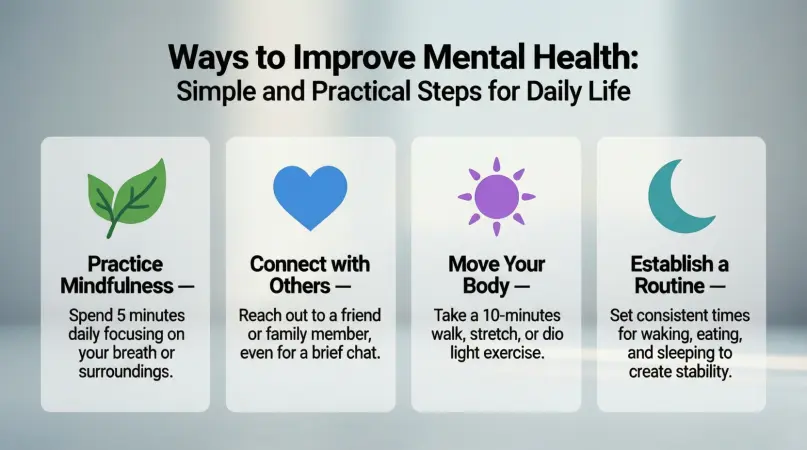
Improving mental health includes caring for thoughts, emotions, and behaviors. It also involves how we sleep, eat, work, and interact with others. Simple habits like regular sleep, positive thinking, and social connection all play a role.
Mental health self care means paying attention to your inner state before problems grow bigger. It helps you notice early signs of stress, anxiety, or burnout. When you practice healthy mind habits, you build emotional strength over time.
Ways to improve mental health are different for each person. What works for one person may not work for another. The key is consistency and awareness. Small daily efforts often bring better results than big changes done once.
You May Also Like It
Daily Exercise Routine: A Simple Guide for a Healthier Life
Protein Rich Foods List for Health & Muscle
Diet Plan for Healthy Life – Simple Steps to Stay Fit
Why Is Ways to Improve Mental Health Important?
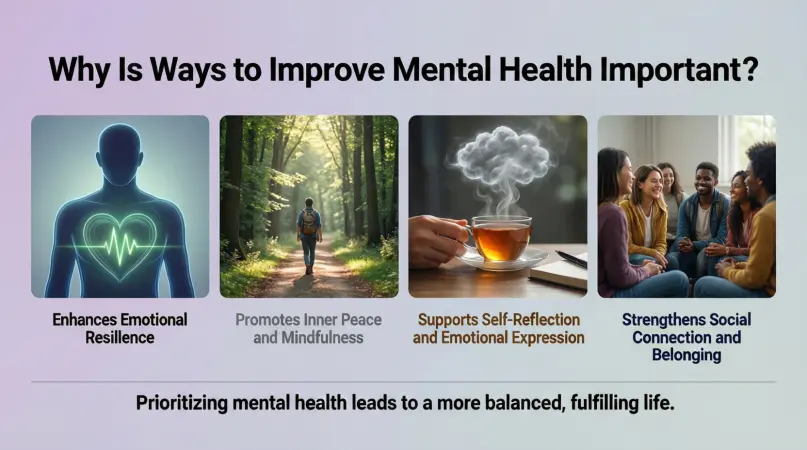
Mental health influences every part of life. When your mind feels balanced, daily tasks feel easier. When mental health suffers, even simple activities feel heavy.
Here is why focusing on ways to improve mental health is important:
- It helps you manage stress in a healthy way
- It improves focus and decision-making
- It supports better relationships
- It boosts confidence and self-esteem
- It helps prevent burnout and emotional exhaustion
Good mental health also supports physical health. Stress and negative emotions can affect sleep, digestion, and immunity. By using mental well-being tips daily, you protect both mind and body.
Mental health self care also helps you respond better during hard times. Instead of feeling stuck, you learn to adapt and recover faster. This skill is useful at work, at home, and in personal growth.
Detailed Step-by-Step Guide
Step 1: Build a Healthy Daily Routine
A simple routine gives structure to the day. It helps the mind feel safe and organized.
- Wake up and sleep at fixed times
- Plan meals and breaks
- Set clear work and rest hours
A routine reduces decision stress and supports healthy mind habits.
Step 2: Practice Mindful Breathing
Mindful breathing calms the nervous system. It is one of the easiest ways to improve mental health.
- Sit comfortably
- Breathe in slowly through your nose
- Breathe out gently through your mouth
Doing this for five minutes daily can lower stress.
Step 3: Move Your Body Regularly
Physical movement supports mental well-being. You do not need intense exercise.
- Walk for twenty minutes
- Stretch in the morning
- Do light home workouts
Movement releases natural mood boosters in the brain.
Step 4: Improve Sleep Quality
Sleep is essential for mental health self care.
- Avoid screens before bed
- Keep your room dark and quiet
- Sleep and wake at the same time
Good sleep improves mood and focus.
Step 5: Eat for Mental Well-Being
Food affects how the brain works.
- Eat balanced meals
- Drink enough water
- Reduce excess sugar
Healthy food supports stable energy and emotions.
Step 6: Limit Negative Media Intake
Too much negative news affects mental health.
- Set time limits for social media
- Avoid scrolling before sleep
- Follow positive content
This protects your mental space.
Step 7: Stay Socially Connected
Human connection is a powerful mental well-being tip.
- Talk with friends or family
- Share your feelings
- Listen without judgment
Supportive relationships improve emotional strength.
Step 8: Practice Gratitude Daily
Gratitude shifts focus from problems to positives.
- Write three good things daily
- Reflect on small wins
- Appreciate simple moments
This habit improves mood over time.
Step 9: Set Healthy Boundaries
Boundaries protect mental energy.
- Say no when needed
- Limit overworking
- Respect personal time
Boundaries reduce stress and burnout.
Step 10: Seek Help When Needed
Asking for help is strength, not weakness.
- Talk to a trusted person
- Consider professional support
- Share concerns early
Early support prevents bigger issues.
You May Also Like It
Best Foods for Energy: Boost Your Vitality Naturally
Nutrition Tips for Beginners: Easy Guide for Healthy Eating
Healthy Diet for Weight Loss: A Simple and Practical Guide
Benefits of Ways to Improve Mental Health
- Better stress control
- Improved emotional balance
- Higher self-confidence
- Better focus and productivity
- Stronger relationships
- Improved sleep quality
- Greater life satisfaction
Disadvantages / Risks
- Requires consistency and patience
- Results may take time
- Some methods may not fit everyone
- Overdoing self care can cause pressure
Balance is important when practicing mental health self care.
Common Mistakes to Avoid
Many people start strong but quit early. Avoid these mistakes:
- Expecting fast results
- Ignoring sleep and rest
- Comparing progress with others
- Trying too many methods at once
- Avoiding help due to shame
Small steps work better than big promises.
FAQs
What are the easiest ways to improve mental health?
Simple habits like good sleep, daily walks, and mindful breathing are easy and effective. Consistency matters more than effort.
How long does it take to see results?
Some benefits appear in days, while others take weeks. Mental well-being grows slowly with regular practice.
Can mental health improve without therapy?
Yes, many people improve through self care and lifestyle changes. Therapy helps when problems feel overwhelming.
Is mental health self care selfish?
No, it helps you function better and support others. A healthy mind benefits everyone around you.
Can diet really affect mental health?
Yes, balanced nutrition supports brain function and emotional stability. Poor diet can increase stress and fatigue.
What if motivation feels low?
Start with very small steps. Even one positive action daily builds momentum over time.
Expert Tips & Bonus Points
- Focus on progress, not perfection
- Track habits weekly, not daily
- Combine physical and mental practices
- Celebrate small improvements
- Adjust methods as life changes
Experts agree that flexible and simple routines work best.
Conclusion
Mental health is not something to fix only during crisis. It is something to care for every day. Learning effective ways to improve mental health helps you live with more balance, clarity, and confidence. The steps shared in this guide are simple, practical, and suitable for daily life.
Mental well-being tips work best when practiced regularly. You do not need to change everything at once. Start with one habit and build slowly. Over time, these small actions create strong healthy mind habits.
Mental health self care is a personal journey. Some days will feel easy, and others may feel hard. That is normal. What matters is staying aware and kind to yourself. When you care for your mental health, you improve not only your own life but also your relationships and work.
By choosing consistent ways to improve mental health, you invest in a happier and more stable future. Your mind deserves the same care and attention as your body. Start today, stay patient, and keep moving forward with confidence.
You May Also Like It
Balanced Diet Plan: A Simple and Practical Guide for Everyday Health
Signs of Depression: A Clear and Simple Guide for Everyone
Mental Health Self Care: A Simple and Practical Guide for Everyday Life