
Introduction
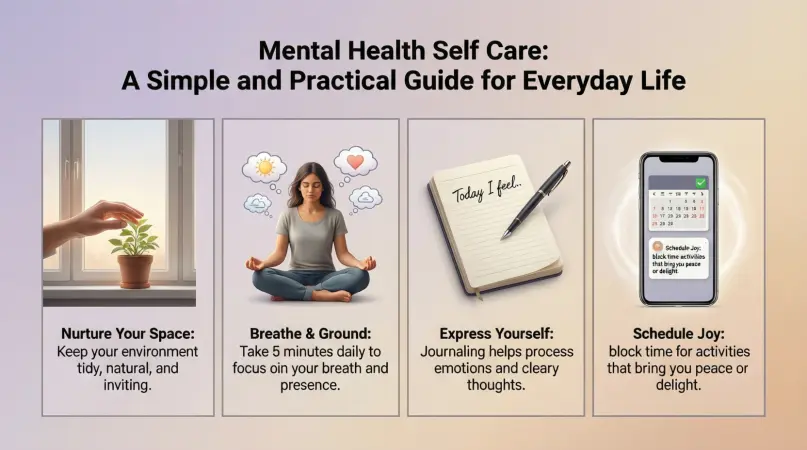
Mental health self care is not a luxury. It is a basic need for a healthy and balanced life. In today’s fast-moving world, many people feel tired, stressed, and emotionally drained. Work pressure, family duties, money worries, and constant screen time slowly affect the mind. When mental health is ignored, even small tasks can feel heavy and hard to manage.
Mental health self care means taking regular steps to protect and improve your emotional and mental well-being. It includes simple daily actions that help you feel calm, focused, and emotionally strong. These actions do not need to be costly or complex. Small habits, done with care, can bring big changes over time.
Many beginners think self care is only about spa days or long vacations. In reality, it is about daily choices. It is about how you sleep, how you talk to yourself, and how you manage stress. Mental health self care helps you understand your feelings and respond to them in a healthy way.
This guide is written for beginners and intermediate readers who want clear and simple information. You will learn what mental health self care is, why it matters, and how to practice it step by step. You will also learn common mistakes, risks, and expert tips. By the end, you will have a practical plan you can use in real life, starting today.
What is Mental Health Self Care?
Mental health self care is the practice of looking after your emotional, psychological, and mental well-being. It focuses on actions that help you cope with stress, manage emotions, and maintain a healthy mindset.
This type of self care is not selfish. It helps you function better at work, at home, and in relationships. When your mind feels supported, you can think clearly and make better decisions.
Mental health self care includes many areas, such as emotional care, physical habits, social support, and mental rest. It can be as simple as taking a short walk, writing your thoughts, or saying no when you feel overwhelmed.
Self care for mental health also means noticing warning signs. These signs may include constant worry, sadness, anger, or lack of motivation. When you notice these signs early, you can respond with care instead of ignoring them.
In short, mental health self care is about building a kind and supportive relationship with your own mind.
You May Also Like It
Daily Exercise Routine: A Simple Guide for a Healthier Life
Protein Rich Foods List for Health & Muscle
Diet Plan for Healthy Life – Simple Steps to Stay Fit
Why is Mental Health Self Care Important?
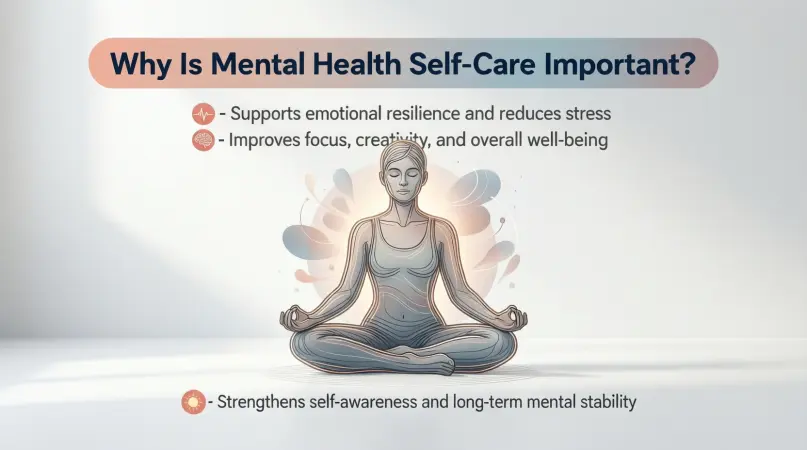
Mental health self care is important because the mind affects every part of life. When mental health is poor, physical health, work performance, and relationships suffer.
Stress and anxiety can build up silently. Without self care, these feelings may turn into burnout or emotional exhaustion. Daily self care habits help release pressure before it becomes too heavy.
Mental health self care also improves focus and productivity. A calm mind can solve problems faster and handle challenges with confidence. This is helpful for students, workers, and business owners.
Another reason is emotional balance. Self care helps you understand your emotions instead of fighting them. This leads to healthier reactions and fewer emotional outbursts.
Finally, mental health self care supports long-term well-being. It helps prevent serious mental health issues by creating strong daily routines. Just like brushing your teeth protects oral health, self care protects mental wellness.
Detailed Step-by-Step Guide
Step 1: Understand Your Mental State
The first step in mental health self care is awareness. You need to know how you feel before you can care for yourself properly.
Take a few minutes each day to check in with your emotions. Ask yourself simple questions. Do I feel calm, stressed, sad, or tired today? There is no right or wrong answer.
Writing your thoughts in a notebook can help. This habit allows you to see patterns in your mood. Over time, you will understand what affects your mental health the most.
Step 2: Create a Simple Daily Routine
A daily routine gives structure to the mind. It reduces decision stress and creates a sense of control.
Start with basic habits. Wake up at a regular time. Eat meals on time. Set a fixed bedtime. These simple actions support self care for mental health.
Add small breaks during the day. Even five minutes of quiet time can refresh the mind. Consistency matters more than perfection.
Step 3: Practice Healthy Thinking
Thoughts shape emotions. Mental health self care includes learning how to guide your thoughts in a healthy way.
Notice negative self-talk. Replace harsh words with kinder ones. For example, instead of saying “I always fail,” say “I am learning and improving.”
Positive thinking does not mean ignoring problems. It means facing them with hope and patience. This habit slowly improves emotional strength.
Step 4: Manage Stress Effectively
Stress is part of life, but unmanaged stress harms mental wellness. Learning stress management is a key part of mental health self care.
Deep breathing is a simple tool. Take slow breaths for a few minutes when stress rises. This signals the body to relax.
Physical movement also reduces stress. A short walk or light stretching can release tension. These actions support mental wellness tips that work in real life.
Step 5: Set Healthy Boundaries
Boundaries protect your mental energy. They help you avoid burnout and emotional overload.
Learn to say no when needed. You do not have to explain yourself every time. Respecting your limits is an act of self respect.
Boundaries also include digital limits. Reducing screen time before bed improves sleep and mental clarity.
Step 6: Build Supportive Connections
Humans need connection. Mental health self care includes maintaining healthy relationships.
Talk to people you trust. Sharing feelings reduces emotional weight. You do not need solutions, just understanding.
At the same time, limit time with people who drain your energy. Choose relationships that feel safe and respectful.
Step 7: Make Time for Rest and Joy
Rest is not laziness. It is essential for mental recovery. Schedule rest just like work tasks.
Do activities that bring joy. Reading, listening to music, or spending time in nature are simple daily self care habits.
Joyful moments recharge the mind and improve emotional balance over time.
You May Also Like It
Best Foods for Energy: Boost Your Vitality Naturally
Nutrition Tips for Beginners: Easy Guide for Healthy Eating
Healthy Diet for Weight Loss: A Simple and Practical Guide
Benefits of Mental Health Self Care
- Improves emotional balance and mood
- Reduces stress and anxiety levels
- Increases focus and mental clarity
- Supports better sleep quality
- Strengthens self confidence
- Improves relationships and communication
- Boosts long-term mental wellness
Disadvantages / Risks
- May feel uncomfortable at first
- Requires time and consistency
- Can be misunderstood as selfish
- Results are gradual, not instant
- Lack of guidance may cause confusion
Common Mistakes to Avoid
One common mistake is expecting quick results. Mental health self care works slowly and steadily. Patience is key.
Another mistake is copying others without listening to yourself. What works for one person may not work for you.
Ignoring professional help is also a mistake. Self care supports mental health but does not replace expert support when needed.
Overloading yourself with too many habits at once can cause stress. Start small and grow gradually.
Finally, being too strict with yourself defeats the purpose. Self care should feel supportive, not stressful.
FAQs
What is the best way to start mental health self care?
The best way is to start small. Choose one simple habit, such as daily breathing or journaling. Build slowly from there.
How much time should I spend on self care daily?
Even ten to fifteen minutes can help. Quality matters more than quantity in self care for mental health.
Can mental health self care replace therapy?
No. Self care supports mental wellness, but therapy is important for deeper mental health challenges.
Is self care only for people with mental health problems?
No. Mental health self care is for everyone. It helps prevent problems and supports daily well-being.
What if I feel guilty for taking time for myself?
Guilt is common. Remember that caring for yourself helps you care better for others too.
How long does it take to see results?
Some benefits appear quickly, like calmness. Long-term benefits develop over weeks and months.
Expert Tips & Bonus Points
Focus on progress, not perfection. Small steps count.
Keep your self care plan flexible. Adjust it as life changes.
Celebrate small wins. Acknowledge your effort.
Use reminders to stay consistent.
Be kind to yourself on hard days.
Mental health self care is a lifelong skill. Treat it as an ongoing journey, not a task.
Conclusion
Mental health self care is one of the most valuable skills you can learn. It supports your mind, emotions, and overall quality of life. By taking simple daily actions, you can reduce stress and build emotional strength over time.
This guide showed that mental health self care does not need to be complex. It starts with awareness, routine, healthy thinking, and rest. These habits help you feel more balanced and in control.
Remember that self care looks different for everyone. The key is to listen to your needs and respond with kindness. Do not compare your journey with others. Your pace is enough.
Consistency is more important than intensity. Small daily self care habits create strong mental foundations. When challenges appear, these habits help you cope with clarity and calm.
You May Also Like It
Balanced Diet Plan: A Simple and Practical Guide for Everyday Health
Signs of Depression: A Clear and Simple Guide for Everyone
Ways to Improve Mental Health: Simple and Practical Steps for Daily Life