
Introduction
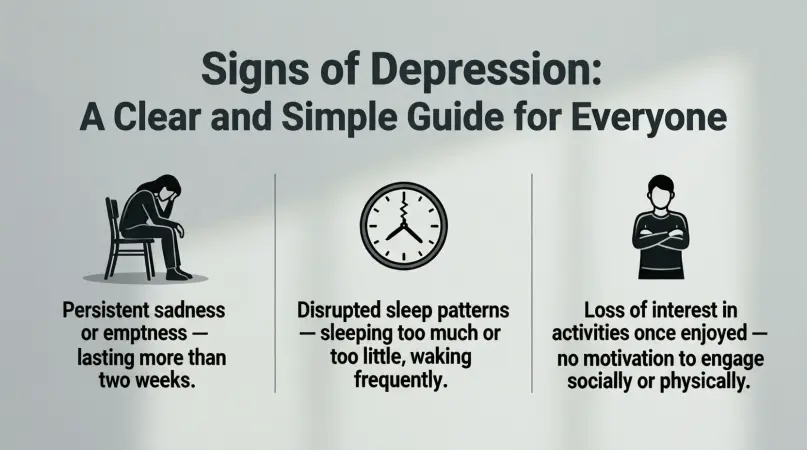
Depression is more common than many people think. It can affect anyone, at any age, and in any situation. Some people feel sad for a short time and recover quickly. Others feel low, tired, and hopeless for weeks or months. Understanding the signs of depression helps people notice problems early and take the right steps.
Many people ignore emotional pain because they think it is weakness or just a bad mood. However, depression is not laziness or lack of faith. It is a real mental health condition that affects thoughts, feelings, and daily life. When left untreated, it can harm relationships, work, health, and self-confidence.
The problem is that depression does not always look the same. Some people cry a lot. Others smile but feel empty inside. Some feel tired all the time. Others feel angry or restless. This is why learning the signs matters.
This article explains the signs of depression in clear and simple language. It is written for beginners and intermediate readers. You will learn what depression is, why it matters, common warning signs, benefits of early awareness, risks, mistakes to avoid, and answers to common questions.
By the end, you will be better prepared to recognize depression in yourself or others. Early understanding can lead to early support, better recovery, and a healthier life.
What is Depression?
Depression is a mental health condition that affects how a person thinks, feels, and acts. It is more than feeling sad for a day or two. Depression lasts longer and interferes with daily activities.
A person with depression may feel empty, hopeless, or numb most of the time. Simple tasks may feel heavy. Motivation can drop. Joy may disappear, even from things once loved.
Depression can affect sleep, appetite, focus, and energy. It can also affect physical health. Headaches, body pain, and stomach issues are common.
The signs of depression can be emotional, mental, physical, and behavioral. Not everyone experiences the same symptoms. Some people have mild symptoms. Others have severe ones.
Depression is treatable. With the right help, many people recover and live full lives. Understanding the condition is the first step.
You May Also Like It
Daily Exercise Routine: A Simple Guide for a Healthier Life
Protein Rich Foods List for Health & Muscle
Diet Plan for Healthy Life – Simple Steps to Stay Fit
Why is Depression Important?
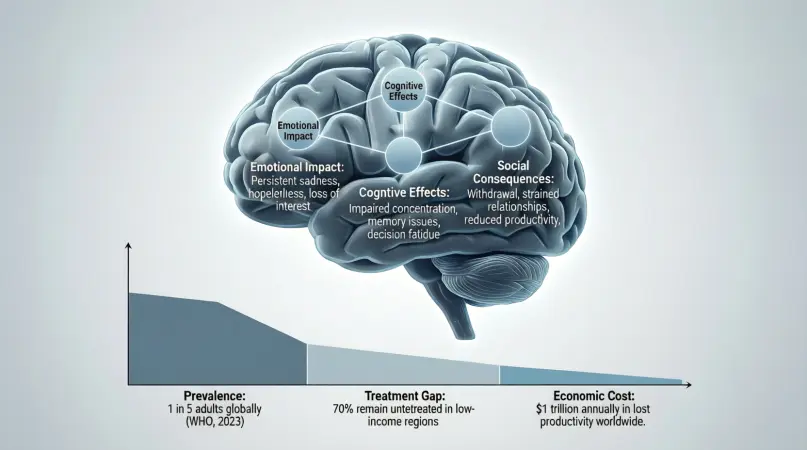
Depression is important because it affects millions of people worldwide. It does not only affect the person suffering. It also affects families, friends, workplaces, and communities.
Ignoring the signs of depression can make the condition worse. Over time, untreated depression can lead to serious health problems. It can increase stress, weaken immunity, and raise the risk of chronic illness.
Depression also affects decision-making and focus. This can cause poor performance at work or school. Relationships may suffer because the person may withdraw or become irritable.
Most importantly, severe depression can lead to self-harm or suicidal thoughts. Early awareness can save lives.
When people understand depression, stigma reduces. People feel safer asking for help. Support becomes easier to offer and accept.
Detailed Step-by-Step Guide
Step 1: Emotional Signs of Depression
Emotional changes are often the first warning signs.
Common emotional signs of depression include:
- Feeling sad, empty, or hopeless most days
- Crying without a clear reason
- Feeling guilty or worthless
- Losing interest in life
- Feeling numb or emotionally flat
For example, a person may stop enjoying music, food, or time with family. Even good news may not bring happiness.
These emotional symptoms usually last for weeks, not days.
Step 2: Mental and Thinking Patterns
Depression strongly affects thinking.
Mental symptoms of depression include:
- Constant negative thoughts
- Trouble concentrating
- Forgetfulness
- Slow thinking
- Harsh self-criticism
A person may replay mistakes again and again. They may believe they are a burden or failure, even without proof.
These thought patterns can trap a person in a cycle of sadness and self-blame.
Step 3: Physical Signs of Depression
Depression often shows up in the body.
Common physical depression warning signs include:
- Constant tiredness
- Low energy
- Changes in sleep patterns
- Headaches or body pain
- Digestive problems
Some people sleep too much. Others struggle with insomnia. Even after rest, they still feel exhausted.
These physical symptoms are real and should not be ignored.
Step 4: Behavioral Changes
Behavior changes are often noticed by others first.
Behavioral signs of depression include:
- Withdrawing from friends and family
- Avoiding social events
- Reduced productivity
- Neglecting personal hygiene
- Increased use of alcohol or substances
For example, someone may stop answering calls or cancel plans often. They may lose interest in hobbies or daily routines.
These changes often develop slowly over time.
Step 5: Changes in Appetite and Weight
Depression affects eating habits.
Some people lose their appetite and skip meals. Others eat more, especially comfort foods.
Possible signs include:
- Sudden weight loss
- Sudden weight gain
- Loss of interest in food
- Eating for emotional comfort
These changes may add to feelings of guilt or low self-esteem.
Step 6: Sleep Disturbances
Sleep problems are common early signs of depression.
These include:
- Trouble falling asleep
- Waking up too early
- Sleeping too much
- Feeling unrested after sleep
Poor sleep worsens mood and energy. This creates a cycle that makes depression stronger.
Step 7: Loss of Motivation and Interest
A major sign of depression is losing interest in things once enjoyed.
This includes:
- Hobbies
- Work goals
- Social activities
- Personal growth
Even simple tasks like cleaning or replying to messages may feel overwhelming.
Step 8: Irritability and Anger
Depression does not always look like sadness.
Some people experience:
- Irritability
- Short temper
- Frustration
- Restlessness
This is common in men and younger people. It is often misunderstood and ignored.
Step 9: Feelings of Hopelessness
Hopelessness is a serious symptom.
A person may feel:
- Life will never improve
- Efforts are pointless
- The future is empty
These thoughts increase the risk of severe depression.
Step 10: Thoughts of Death or Self-Harm
In severe cases, depression includes thoughts about death.
Warning signs include:
- Talking about wanting to disappear
- Feeling life is not worth living
- Thinking about self-harm
These signs require immediate attention and support.
Benefits of Understanding Depression
Recognizing the signs of depression has many benefits.
- Early support and treatment
- Better emotional awareness
- Stronger relationships
- Reduced stigma
- Improved quality of life
- Lower risk of severe outcomes
Understanding leads to compassion, not judgment.
Disadvantages / Risks
Ignoring or misunderstanding depression carries risks.
- Worsening mental health
- Increased physical illness
- Relationship breakdown
- Poor work performance
- Risk of self-harm
Lack of awareness delays recovery.
Common Mistakes to Avoid
Many people make mistakes when dealing with depression.
Common errors include:
- Thinking depression is weakness
- Ignoring early signs
- Giving harmful advice like “just be positive”
- Comparing pain
- Avoiding professional help
Understanding and patience are key.
You May Also Like It
Best Foods for Energy: Boost Your Vitality Naturally
Nutrition Tips for Beginners: Easy Guide for Healthy Eating
Healthy Diet for Weight Loss: A Simple and Practical Guide
FAQs
What are the earliest signs of depression?
Early signs include low mood, tiredness, poor sleep, and loss of interest. These symptoms last for weeks and affect daily life.
Can depression go away on its own?
Mild depression may improve, but many cases need support. Ignoring symptoms can make them worse over time.
Are sadness and depression the same?
No. Sadness is temporary. Depression lasts longer and affects many areas of life.
Can children and teens have depression?
Yes. Depression can affect all ages. Symptoms may include irritability, withdrawal, and behavior changes.
Is depression only emotional?
No. Depression affects emotions, thoughts, body, and behavior. Physical symptoms are common.
When should someone seek help?
If symptoms last more than two weeks or affect daily life, professional support is important.
Expert Tips & Bonus Points
Here are practical expert tips:
- Pay attention to small changes
- Track mood and energy
- Maintain simple routines
- Talk openly without judgment
- Encourage professional guidance
- Practice patience and kindness
Support and understanding make recovery easier.
Conclusion
Depression is a serious but treatable condition. Learning the signs of depression helps people take action before the condition becomes severe. Depression does not always look the same. It can appear as sadness, anger, tiredness, or loss of interest. Emotional, mental, physical, and behavioral changes all matter.
Many people suffer in silence because they do not recognize what they are feeling. Others fear judgment. Awareness breaks this silence. It opens the door to support, care, and healing.
Understanding depression also helps families and friends offer better support. Instead of giving advice or blame, they can offer patience and presence. Small acts of understanding can make a big difference.
Depression is not a failure. It is not weakness. It is a human experience that deserves care and respect. Early awareness leads to early help. Early help leads to better outcomes.
If you or someone you know shows signs of depression, take it seriously. Support, understanding, and proper care can restore hope and improve life.
You May Also Like It
Balanced Diet Plan: A Simple and Practical Guide for Everyday Health
Ways to Improve Mental Health: Simple and Practical Steps for Daily Life
Mental Health Self Care: A Simple and Practical Guide for Everyday Life